
The applications for power electronics are multiplying steadily. Often these are associated with increasing power densities and more need for miniaturization. This presents developers with a greater variety of thermal management challenges. Achieving optimal thermal dissipation is complicated by the number of variables involved, as well as the ever-changing working conditions many of these solutions face.
One important factor in thermal management and heat dissipation that often gets over-looked is the printed circuit board: The PCB has the potential to meet important heat sink requirements for high power devices. Kinwong Electronic is a PCB specialist with a long involvement in the R&D for PCBs used in high power, DC/DC automotive electronics, such as on-board charging and the related high-power-density power supplies and inverters. Apart from acquiring an expertise in the selection of power devices, these solutions have helped Kinwong develop a proficiency in thermal sim-ulation technology, and the thermal conductivity of different materials, to get the optimal thermal dissipation solution under different heat flux and working conditions.
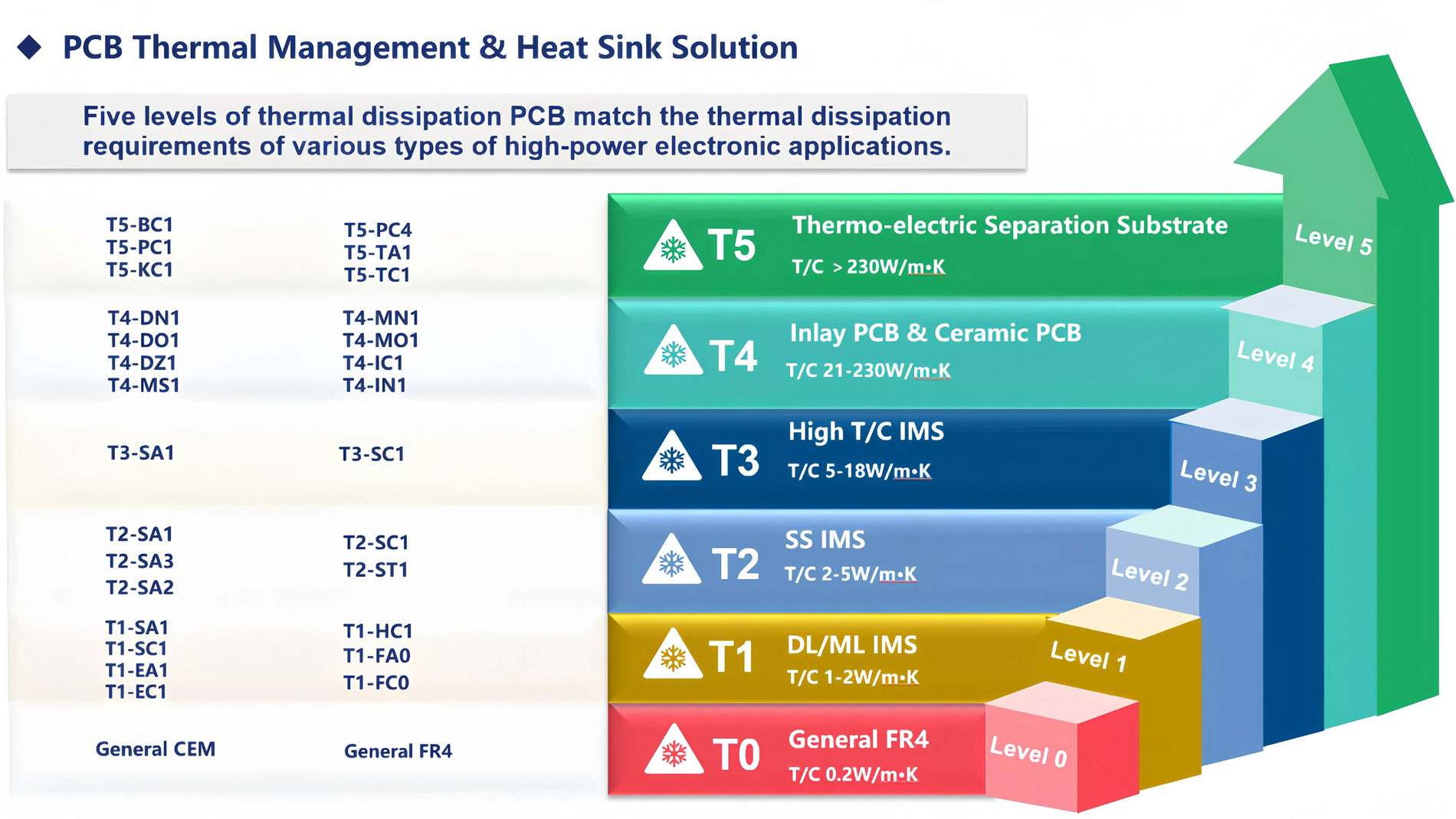
The outcome is a range of PCB technologies with potential applications that go far beyond EVs. These start with multilayer thermal sub-strates that can conduct 1 W/(m.K), proceed through solutions using copper or aluminium-based PCBs or embedded ultra heavy copper or ceramics, to the ultimate in thermoelectric separation technologies, which thermal conductivity can conduct up to 1000 W/(m.K). The resulting range of PCB solutions makes it possible to optimise for the thermal dissipation characteristics needed by many different high-power devices, modules and products.
Advertisement