Since its foundation in 1979, PCIM has evolved from a small specialist conference into the world’s leading platform for power electronics. Furthermore, the subject is becoming increasingly important thanks to electrification, energy efficiency, e-mobility, and AI applications.
When PCIM first opened its doors at the Sheraton Hotel in Munich, no one could have imagined that it would one day become the world’s most important event for power electronics. The conference was initiated by Gerd Zieroth of ZM Communications. From the outset, he prioritised integrating the specialist conference with the accompanying exhibition, a concept that remains at the core of PCIM to this day. Supported by a dedicated Advisory Board, including renowned experts such as Leo Lorenz, PCIM established a strong technical foundation, with the Advisory Board playing a key role in defining and ensuring the consistently high quality of the conference programme.
With just a handful of exhibitors, including Siemens, AEG, Brown Boveri and International Rectifier, and around 200 conference participants, the first event was relatively small-scale. However, it still attracted an international audience, with representatives from France, the UK, Italy, the USA and Japan. Topics covered included power conversion and intelligent drive technology (Intelligent Motion). As well as grid and voltage quality (power quality). However, from the outset, power semiconductor technology and the associated components also played a central role. As well as the power semiconductors themselves, innovative drive concepts also came into focus. Renowned experts in electric drives and motion control such as Dan Jones and Ted Hopper epitomised the spirit of technological innovation of that era.
Move to Nuremberg
PCIM moved from Munich to Nuremberg in 1991. Ten years after the first PCIM, there were 83 exhibitors and 1,354 visitors, while 642 people attended the conference itself. Today, PCIM occupies six exhibition halls and attracts 685 exhibitors, as well as over 16,500 visitors from around the globe. Therefore, from today’s perspective, it can be said that growth has been almost continuous over several decades, with the exception of the years affected by the pandemic.
In 2002, PCIM was taken over by Mesago, whilst retaining its fundamental concept. Lisette Hausser, PCIM’s Vice President, explains: »The combination of a trade fair, a conference and seminars has proved to be a decisive factor in its success. We see the close link between science and industry as PCIM’s unique selling point. This is where developers, researchers, component manufacturers and system providers come together directly, enabling innovations to reach the market more quickly.«
Drivers of growth
The event’s growth was primarily driven by the development of power electronics. What was once a specialised field for drives and industrial applications has evolved over time into a key technology for many industries. Electric mobility, renewable energies, industrial automation, railway technology, aviation, and increasingly, data centres, would be unthinkable without high-performance power electronics. »PCIM has benefited from its consistent focus on this field, as well as from linking technology, system aspects and applications at an early stage,« Lisette Hausser continues.
Of course, PCIM was not immune to crises either. During the financial and economic crisis of 2008/2009, the event’s growth initially stagnated as the automotive sector and industry were severely affected by a slump in demand. However, two new growth markets emerged at that time: photovoltaics and electromobility. The greatest challenge for PCIM, as for all other trade fairs, was the pandemic. No in-person events could take place at that time, so everything had to be converted to digital formats at short notice. Lisette Hausser continues: »Despite this, the power electronics market remained stable or even grew in certain sectors, such as data centres and renewable energy.«
Supply chain issues, the semiconductor shortage, and geopolitical tensions in 2022 and 2023 also had an enormous impact on various sectors, as is well known. However, Lisette Hausser explains that »this crisis has reinforced rather than weakened the importance of PCIM. It demonstrated that exchange is vital. In an environment characterised by rapid technological and market changes, a trade fair like PCIM is an especially important platform for exchange and networking.«
»The history of PCIM is also the story of the rise of power electronics as a vital key technology in today’s world.«
Internationalisation
PCIM Asia was established as the first PCIM event abroad as early as 2002 – a risky undertaking, as it involved entering an immature market. The market was highly fragmented technologically, there were few standards, and semiconductor expertise in China was still very limited. However, demand for power electronics was also growing rapidly here. Consequently, during its formative phase in China between 2002 and around 2010, PCIM was heavily dominated by international players, with Chinese firms rarely represented in high-end technologies. Lisette Hausser: »Back then, PCIM Asia was essentially a channel for technology transfer from West to East.«
Between 2010 and 2018, PCIM Asia benefited greatly from the rapid growth of the Chinese market. Originally geared primarily towards international companies, it increasingly developed into a platform for the Chinese power electronics industry itself. Lisette Hausser explains: »This trend continued between 2018 and 2020. The trade fair evolved from a technology transfer and import channel purely for Western companies to an independent marketplace for Chinese and Asian companies.« Today, PCIM Asia comprises around 25,000 square metres of exhibition space, with 265 exhibitors and almost 17,000 visitors.
PCIM has also had a presence in India since 2025. Lisette Hausser adds: »With PCIM Asia New Delhi, we are tapping into one of the most dynamic growth markets for power electronics at present. Driven by government support programmes, increasing industrialisation, and rising demand for electrification and energy technologies, India offers attractive prospects for international companies. Following the successful launch of the PCIM Asia New Delhi Conference in 2025, which featured 40 exhibitors, 100 speakers, and 550 participants, plans are in place to further expand the event. We see the conference as a catalyst for the Indian power electronics sector, as well as a platform for innovation, knowledge transfer and international networking.«
The global meeting place for power electronics
From Lisette Hausser’s perspective, PCIM has become a focal point for the global power electronics industry. »It is the largest and most important community gathering for the sector. All the key players come together in one place to discuss innovations,« she continues. This is where new technologies are discussed, market trends emerge and contacts are established across the entire value chain. The close link between the trade fair and the conference has ensured continuous knowledge exchange for decades.
Looking ahead
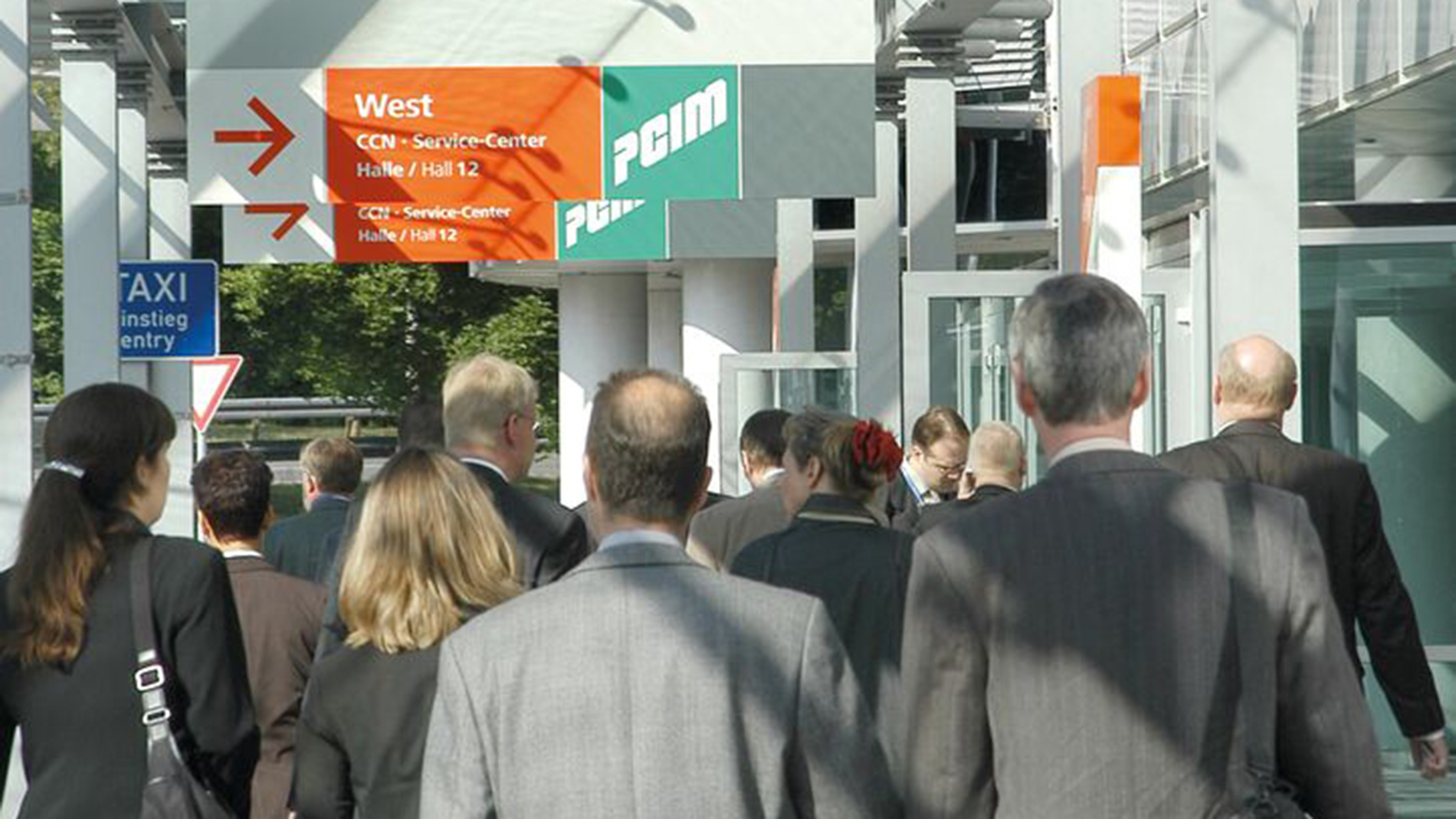
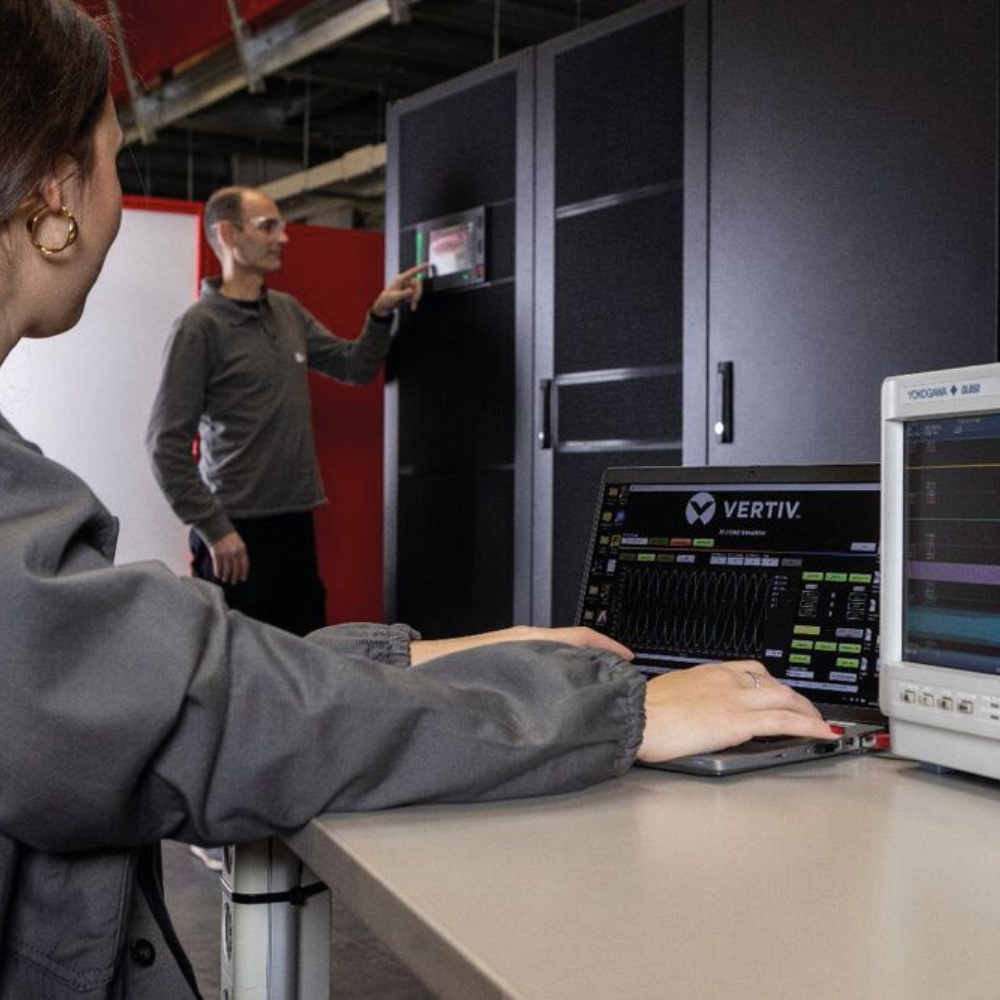
PCIM has consistently reflected the latest developments in power electronics and power semiconductors.(Image: Mesago)
Lisette Hausser is convinced that, in the coming years, PCIM will continue to be the central hub of power electronics, thanks to its combination of exhibition and conference. She continues: »However, we want to support the industry not only during the trade fair days, but also to provide opportunities for knowledge exchange, professional development and networking throughout the year.«
She believes that electrification and the energy transition will continue to be the key drivers of power electronics. At the same time, however, new, rapidly growing fields of application are emerging in the form of artificial intelligence and modern data centres. Lisette Hausser: »The rising demand for computing power requires enormous amounts of energy, high power densities and maximum efficiency in power supply. This makes power electronics a key technology for the digital infrastructure of the future.«
PCIM will keep pace with these developments, bringing together an ever-growing number of stakeholders from the energy supply, information technology, and infrastructure sectors. Lisette Hausser concludes: »It is important for us to maintain our focus on our core themes so as not to dilute the event.« st
Three turning points?
When asked about the three most significant events in the history of PCIM, Mesago cites the following:
PCIM was founded in 1979 with the deliberate intention of being a focused, specialised platform, integrating trade fair and conference elements from the outset to give it credibility and technical depth.
In the 2000s and 2010s, power electronics became a key technology, enabling PCIM to evolve into an international benchmark platform as the market grew.
Through internationalisation, particularly via the launch of PCIM Asia in 2002, PCIM evolved from a European event into a globally networked ecosystem with regional focal points. This ecosystem is now complemented by India.