Power Semiconductors as Performance Enablers for Humanoids
27 Oct 2026
Depending on the architecture, semiconductors worth 500 to 600 dollars could go into humanoid robots in the future—a market from which specialists in power semiconductors also hope to benefit. Gallium nitride (GaN) could play a key role in this.
“If a humanoid robot incorporates, say, $300 worth of GaN technology, that’s a great kind of ‘hype’ for us,” says Dr. Alex Lidow, co-founder and CEO of Efficient Power Conversion (EPC), describing the appeal that the buzz surrounding “humanoid robotics” holds for a specialist in GaN power semiconductors like his company.
“Whether we’re talking about household robots or humanoids used in manufacturing,” Dr. Lidow explains, “extremely compact, high-performance electric motors play a critical role. And that is precisely where our GaN components and the ICs we’ve developed specifically for these applications come into play.”
In his view, there are currently two primary areas where humanoid robots could be deployed. “For the elderly, in particular, a household robot would be incredibly valuable capable of doing laundry, washing dishes, vacuuming, and tidying up. I’ve already seen such robots in action; they aren’t perfect, but they work quite well.” He estimates that many people in developed nations would be willing to purchase a humanoid robot for $25,000 (or 25,000 euros).
Another major area of application he envisions is that of warehouse robots. He describes the requirements for such humanoid robots as follows: “They should weigh approximately 75 kg, operate for at least six hours on a single battery charge, and be capable of lifting up to 35 kg.” While these humanoids would need to be able to identify and sort items, extreme precision in their positioning might not be required.
In the automotive industry, by contrast, humans perform tasks that demand highly precise positioning. “A humanoid would therefore need to be capable of this as well; in this field of application, the focus is primarily on hand-eye coordination,” explains Dr. Lidow.
“Looking at current market analyses and publicly available architectures for humanoid robots,” says Mirco Drews, Senior Manager of Strategic Business Development at Nexperia, “future systems could contain anywhere from 150 to 300 power switches. These would be distributed across motor drives, power conversion stages, battery management, as well as protection functions and power distribution.”
For next-generation humanoid robots, GaN power semiconductors could therefore prove to be a key technology. “Their low switching losses enable motor drives with higher switching frequencies as well as compact DC/DC converters, while simultaneously improving the overall efficiency of the system.”
In practical terms, their use would result in, among other things, smoother movements for humanoid robots, faster response times for their control systems, reduced cooling requirements, and longer battery life. In his view, particularly promising areas of application include 48V motor drives for robot joints and highly efficient DC/DC converters that supply the various voltage ranges required within the robot.
As Drews points out, however, developers of these next-generation humanoids will not rely solely on GaN power semiconductors. Robust low-voltage MOSFETs will still be necessary for implementing battery protection, power distribution, load switching, safety functions, and numerous essential auxiliary systems.
According to Luca Verre, Group Vice President and Head of Strategy for the MDRF Products Group at STMicroelectronics, a typical humanoid platform contains approximately $600 worth of addressable semiconductor content, depending on the chosen architecture. This $600 figure encompasses sensing, embedded intelligence, power management, motor control, and connectivity with these semiconductor components distributed throughout the entire humanoid robot.
A humanoid robot, Verre explains, “is not built around a single chip; it is built around a network of signals and decision-making processes. All of this must remain stable while the humanoid robot navigates the messy and unpredictable human environment.” For this reason, “physical AI” relies on companies “that can help machines understand the world, react in real time, and do so reliably at scale.”
Against the backdrop of a 2024 market assessment by Goldman Sachs Research which suggests there could be 300 million humanoid robots globally within 25 years, representing a revenue potential of $1.7 trillion by 2050 Infineon Technologies is also engaging intensively with the field of humanoid robotics, with a particular focus on silicon and GaN (gallium nitride) power semiconductors.
With projected semiconductor costs of approximately $500 per robot, Infineon is actively seeking collaborations with partners in this sector. Earlier this year, the company entered into a strategic partnership with the Vietnamese firm VinRobotics to develop humanoid robots. The objective of this agreement is to jointly develop and manufacture next-generation humanoid robots for use in industrial, service, and private environments.
In March of this year, Infineon announced the expansion of its collaboration with Nvidia. The goal of this partnership which builds upon a cooperation previously announced in August 2025 is to combine Infineon’s strengths in motor control, microcontrollers, power systems, and security technology with Nvidia’s established AI, robotics, and simulation platforms. Furthermore, Infineon has joined the Nvidia Halos AI Systems Inspection Lab to work on robust hardware and software safety foundations, ensuring that these systems can operate reliably in real-world environments. eg
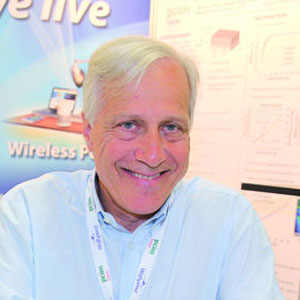
Dr. Alex Lidow, EPC
Extremely small and high-performance electric motors play a crucial role in the realization of next-generation humanoid robots. This is where we come into play with our GaN components and ICs specifically developed for these applications.
Mirco Drews, Nexperia
Looking at current market analyses and publicly available architectures for humanoid robots, future humanoid robots could contain anywhere from 150 to 300 power switches. In this context, GaN could prove to be a key technology.
Lucca Verre, STMicroelectronics
A humanoid robot is not built around a single chip; it is built around a network for signals and decision-making. All of this must remain stable while the humanoid robot navigates through the messy and unpredictable human world.