
By Markus Holzbrecher, responsible developer / product manager for EMC ferrites for PCB assembly and Mohamed Koobar, responsible developer/product manager for EMC ferrites, both Würth Elektronik eiSos.
A chip bead ferrite is an inductor that is manufactured using a screen-printing process and is typically used in EMC filtering. The component consists of a nickel-zinc ferrite and has an inner silver conductor layer a few micrometers thick. This structure makes the classic SMD ferrite susceptible to current peaks above the maximum rated current. These can lead to damage or immediate destruction of the component. The following therefore applies to SMD ferrites in general, where the maximum rated current in the data sheet also defines the largest permissible current amplitude for short-term loading.
With the WE-MPSB component series, however, multilayer ferrites are available, whose data sheets offer a separate peak current consideration. Würth Elektronik has developed an optimized layer design for these products with the aim of achieving high currents, a DC resistance RDC reduced by up to 75 percent and the highest possible impedance over the entire frequency spectrum.
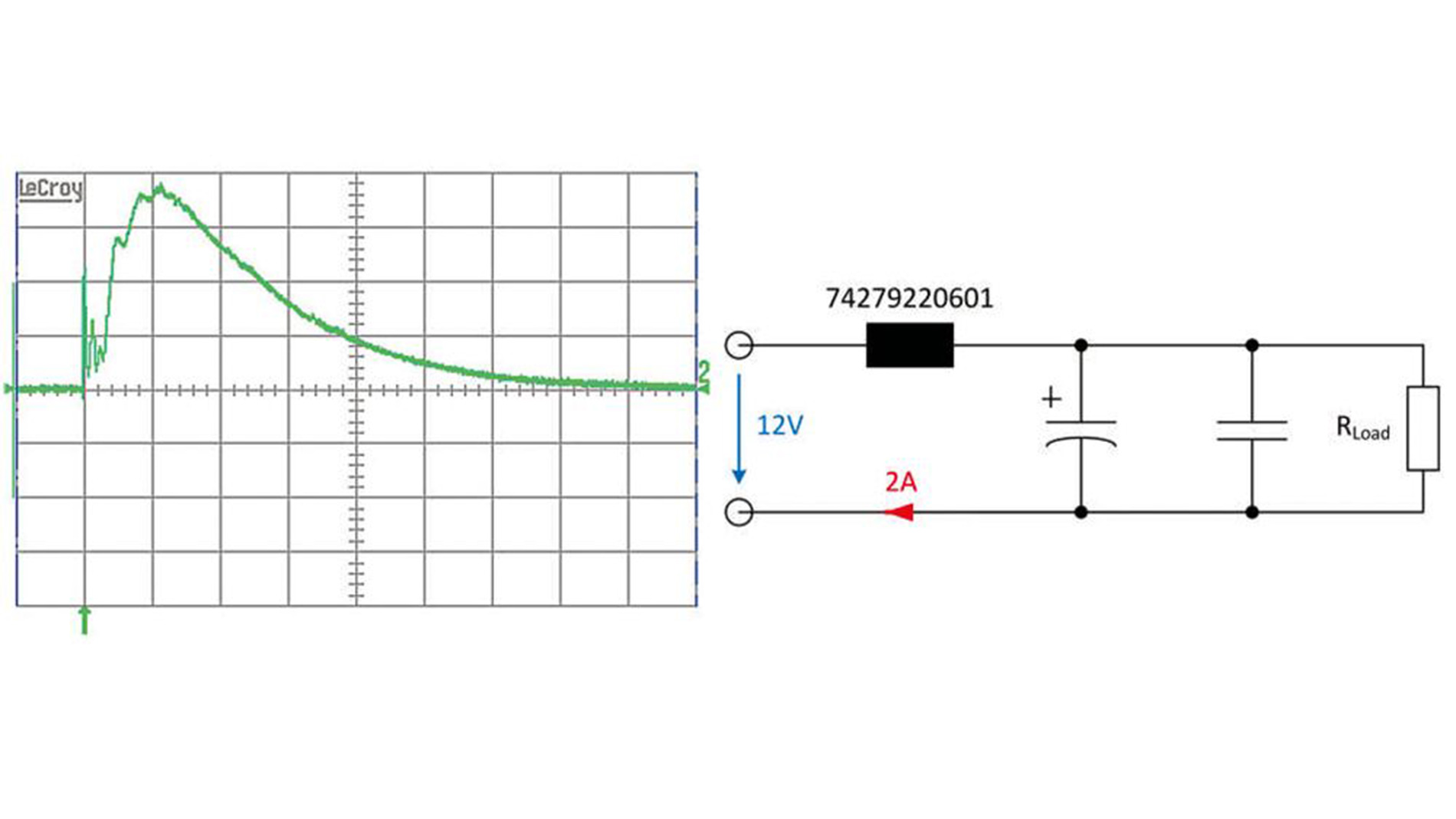
Figure 1 shows a typical application: The multilayer ferrite at the input of the circuit is used as a inline filter. At the moment of switch-on, a very high pulse current flows briefly due to the low ESR of the capacitor. This briefly loads the SMD ferrite with a multiple of the specified maximum rated current. In this example, the optimized multilayer ferrite, which Würth Elektronik refers to as a “multilayer power suppression bead”, or MPSB for short [1], has an impedance of 600Ω with a maximum permissible rated current load of 2.1 A. The single current peak in this circuit reaches a value of approx. 19 A, and it lasts for 0.8 ms before it decays to the rated current of the circuit.
Figure 1: Typical application with peak current at switch-on (5 A/DIV | 100μs/DIV) (Image: Würth Elektronic eiSos)
For SMD ferrites, the maximum rated current generally defines the maximum current amplitude under short-term load. Multilayer ferrites are available in the WE-MPSB series with pulse load, which considers the peak current in the data sheet.
Test procedure for pulse load capacity
Current peaks often occur, for example, during turn-on of various switching power supplies and electric motors. Well-known applications with recurring pulses are, intermittent windshield wiper motors in vehicles, or ballasts for lamps, which can generate a high current peak at the moment the light is switched on. In particular, the input capacitor in a switching regulator often causes a high current peak, which an upstream EMC filter must withstand. In this context, pulses are understood to be short-term current peaks with a time limit of less than 8 ms until the DC current of the circuit has completely decayed.
In the search for a uniform standard for measuring the pulse load capacity of SMD ferrites, the appropriate approach was found in the definition of the melting integral for fuses. To determine the I²t value of the fuses, a pulse of 8 ms is applied to the fuse in accordance with the fuse test process, an interval long enough to heat the fuse. If the fuse holds, the current is increased further until the increase leads to the destruction of the fuse. A pause of 10 s is required between the pulses to give the component the necessary time to cool down. Würth Elektronik has developed a test routine for the multilayer ferrite based on this fuse standard. The rectangular pulse shown in Figure 2 was selected as the pulse shape for all tests because it loads the component with the highest possible energy during the pulse length, even though it will only be encountered very rarely in practice at the moment of switch-on.
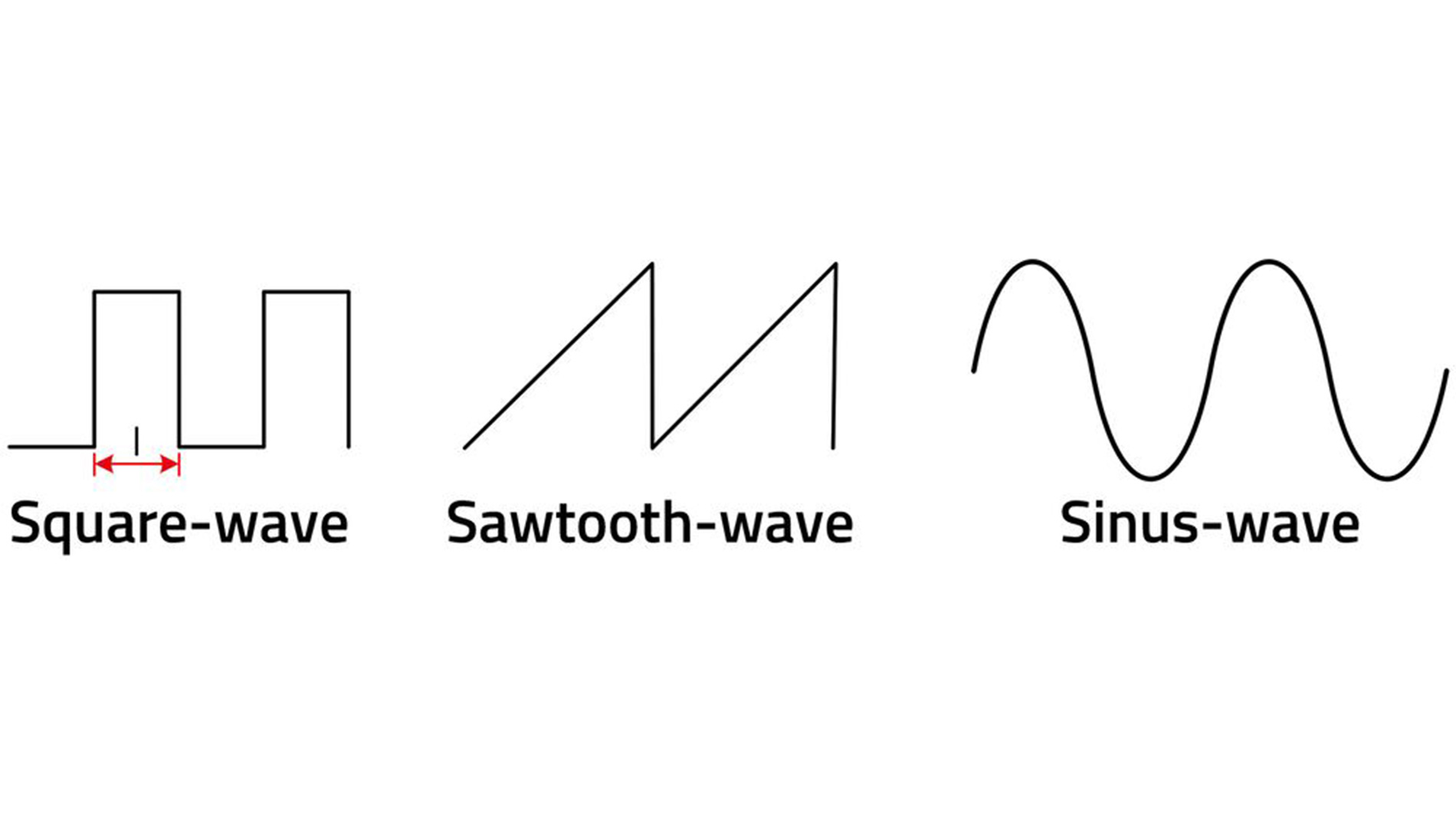
Empirically measured pulse strength
In comparison to the fuse, with multilayer SMD ferrite it is not possible to specify a generally valid formula with which one can draw conclusions about the different peak currents at different pulse lengths by calculating the melting integral. The empirically determined data sheet values are based on long-term test series with different parameters.
To illustrate the inapplicability of the melting integral for multilayer ferrites, take the example of WE-MPSB article 742 792 206 01 (Z = 600Ω, IR= 2.1 A, RDC,typ= 43 mΩ), which has a maximum peak current carrying capacity of 18 A with a pulse length of 8 ms. This results in an I²t value of 2.592 A²ms (18 A @ 8 ms (5 s pause, 24°C) I²t = 2.592 A²s).
If you calculate the current at a pulse length of 2 ms based on the I²t value for 8 ms, you get the following result:
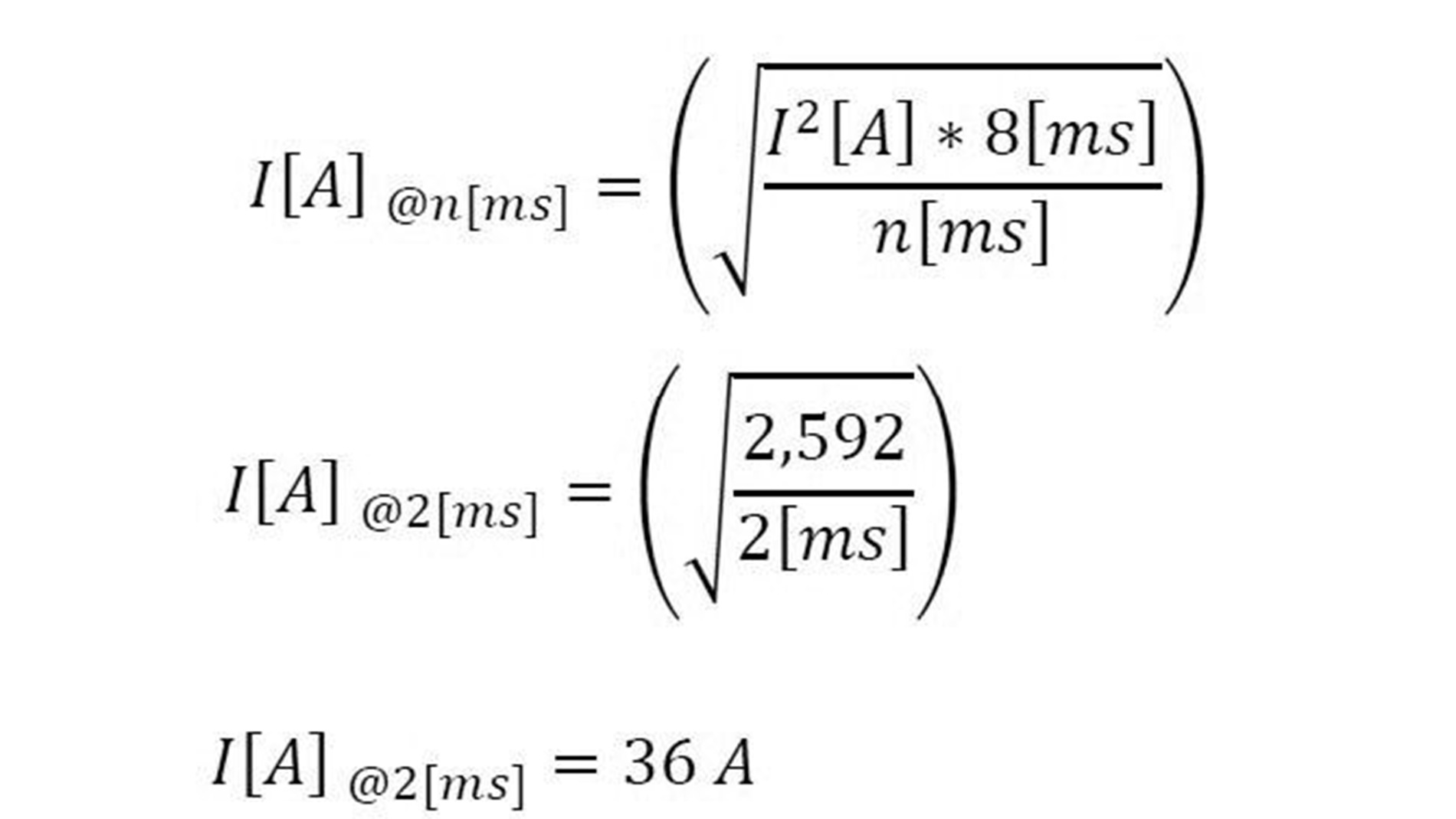
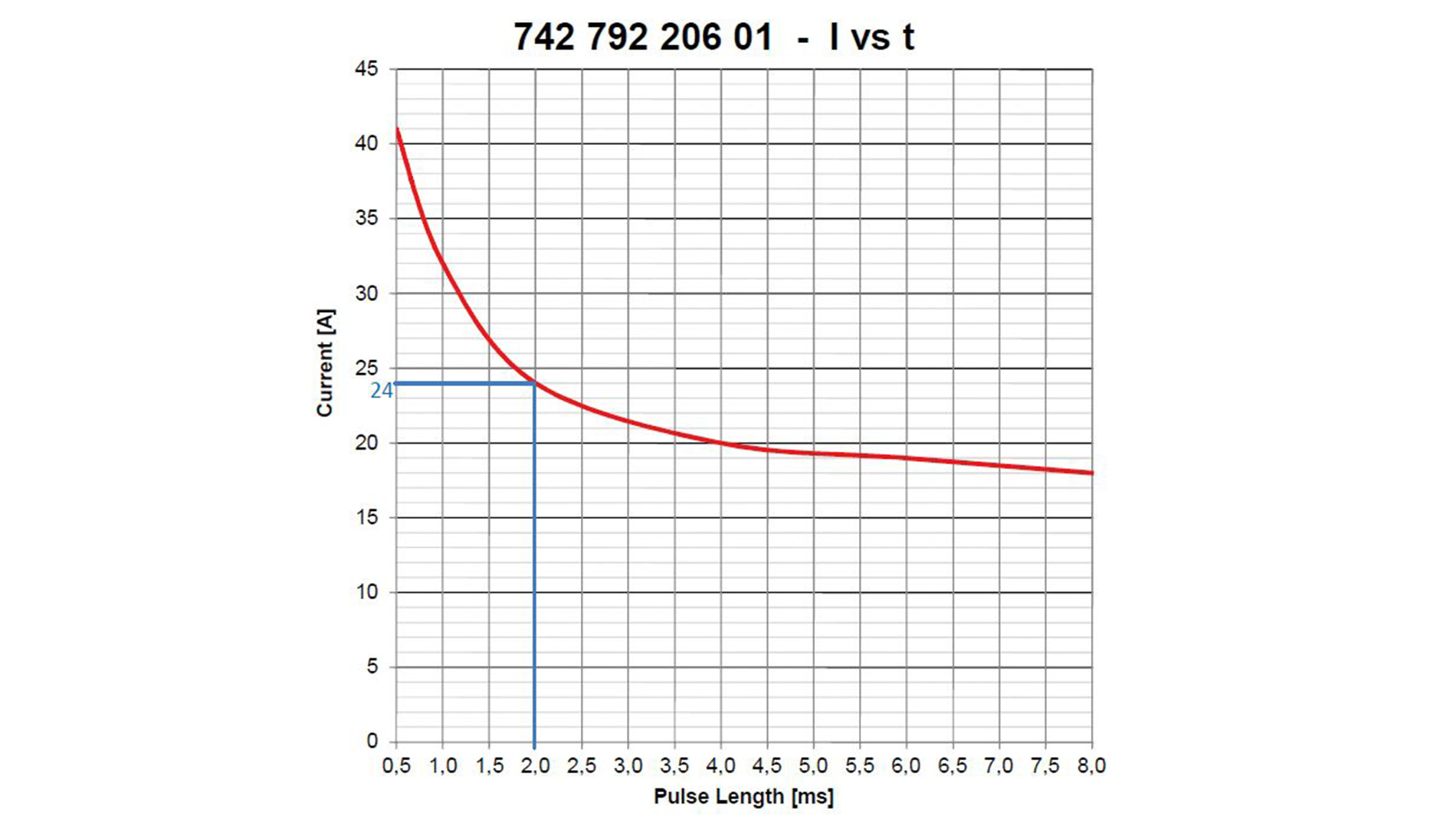
However, the data sheet value (Fig. 3) is specified as maximum of 24 A at 2 ms. The calculated I²t value therefore deviates significantly from the measured values. Consequently, due to this deviating behavior of the SMD ferrite from fusing, it is not possible to use the known calculation of the melting integral I²t applied to a multilayer ferrite.
SMD ferrites are generally not suitable for high pulse currents due to their multilayer structure. Würth has developed an optimized layer design that handles high currents, has up to 75 percent lower RDC and the highest possible impedance across the entire frequency spectrum. Depending on the impedance and current amplitude, the optimum design is used for each individual component.
Figure 3: Specified peak current carrying capacity according to data sheet (Image: Würth Elektronic eiSos)
Using the example of four selected MPSB components, the pulse strength can be examined in more detail. The current-pulse duration curve shown on the left in Figure 4 shows the maximum permissible peak current for the respective pulse durations tested. The tested range extends from 0.5 ms to 8 ms.
The maximum permissible pulse current (Fig. 4 right) for repetitive pulses is shown in the second curve in the data sheets. This curve is a limit value consideration of the maximum peak current for repetitive pulses. A maximum pulse length of 8 ms was selected to determine the curve.
Using the example of four selected MPSB components, the pulse strength can be examined in more detail. The current-pulse duration curve shown on the left in Figure 4 shows the maximum permissible peak current for the respective pulse durations tested. The tested range extends from 0.5 ms to 8 ms.
The maximum permissible pulse current (Fig. 4 right) for repetitive pulses is shown in the second curve in the data sheets. This curve is a limit value consideration of the maximum peak current for repetitive pulses. A maximum pulse length of 8 ms was selected to determine the curve.
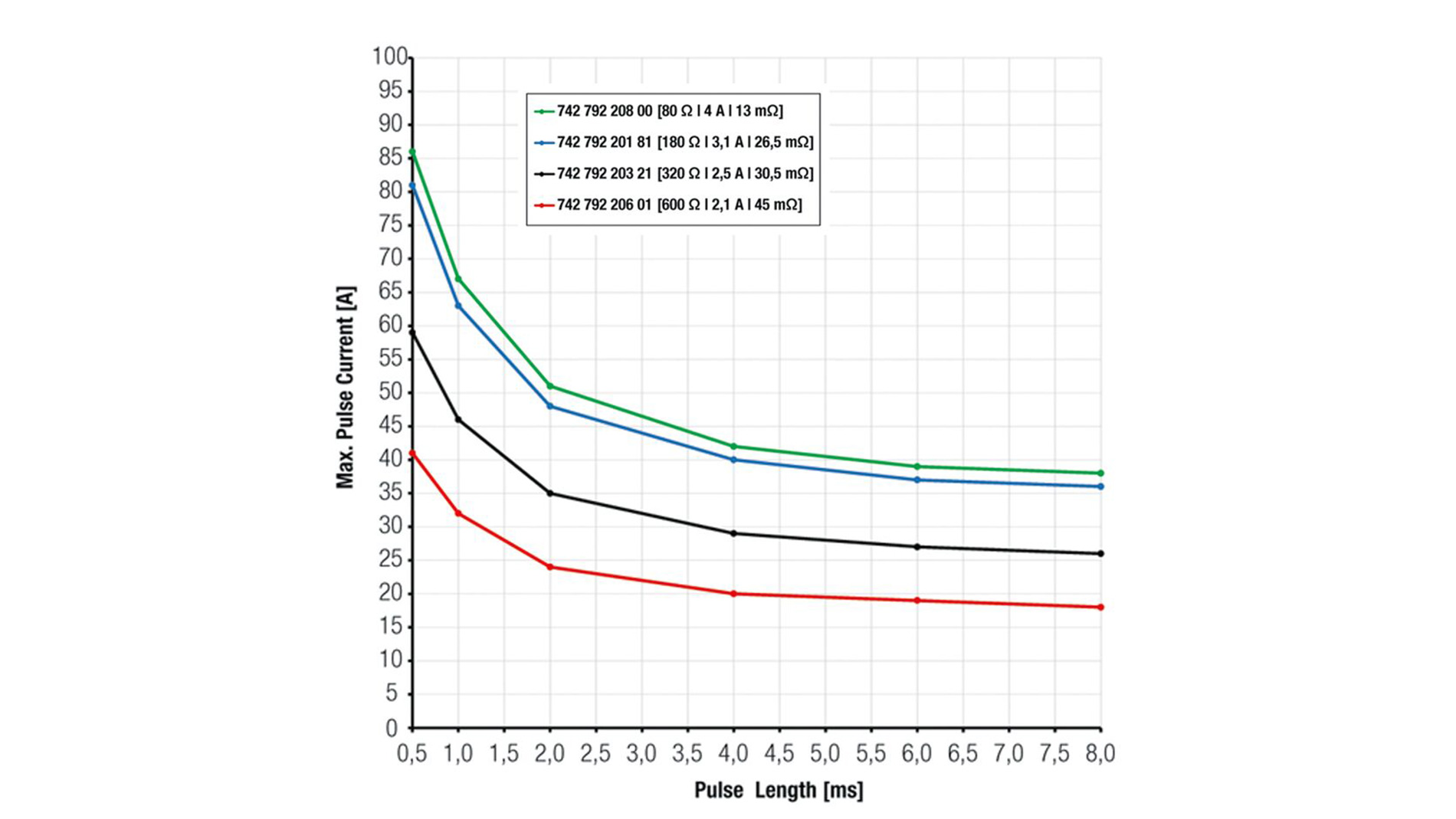
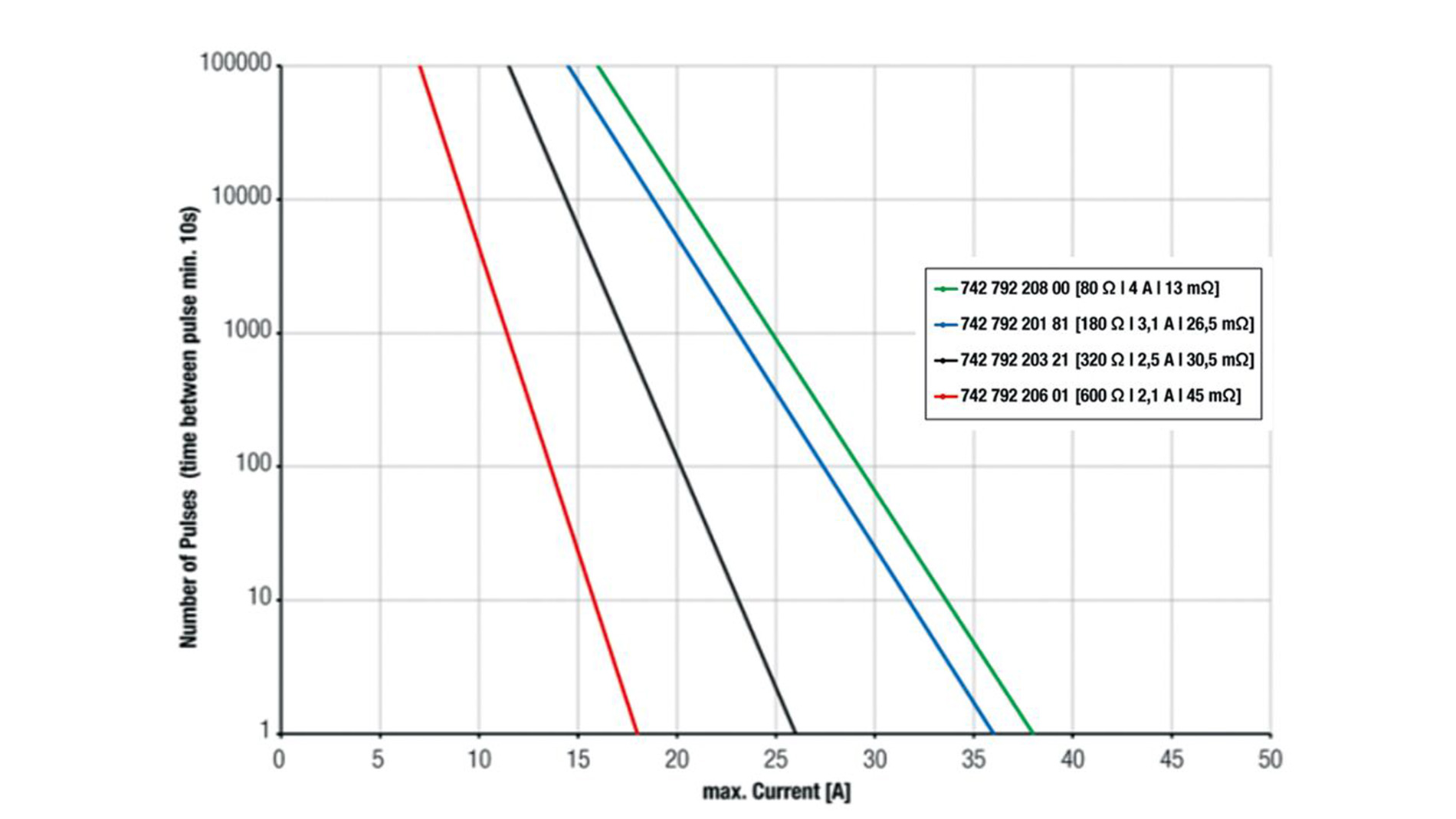
Figure 4: Representation of the current as a function of the pulse duration and the number of pulses at 8 ms (Image: Würth Elektronic eiSos)
Factors influencing the pulse load capacity
The primary factors influencing the pulse load capacity of SMD ferrites are:
- The pulse length t, which is tested from 0.5 ms to 8 ms as standard. The longer the pulse, the lower the maximum pulse load capacity.
- The number of pulses, which is tested from 10 to 100,000 pulses (Fig. 4 right). As the number of pulses increases, the maximum permissible pulse load capacity decreases.
- The third reducing factor to consider is the temperature: as the temperature rises, the RDC increases, which leads to a further reduction in the maximum pulse load.
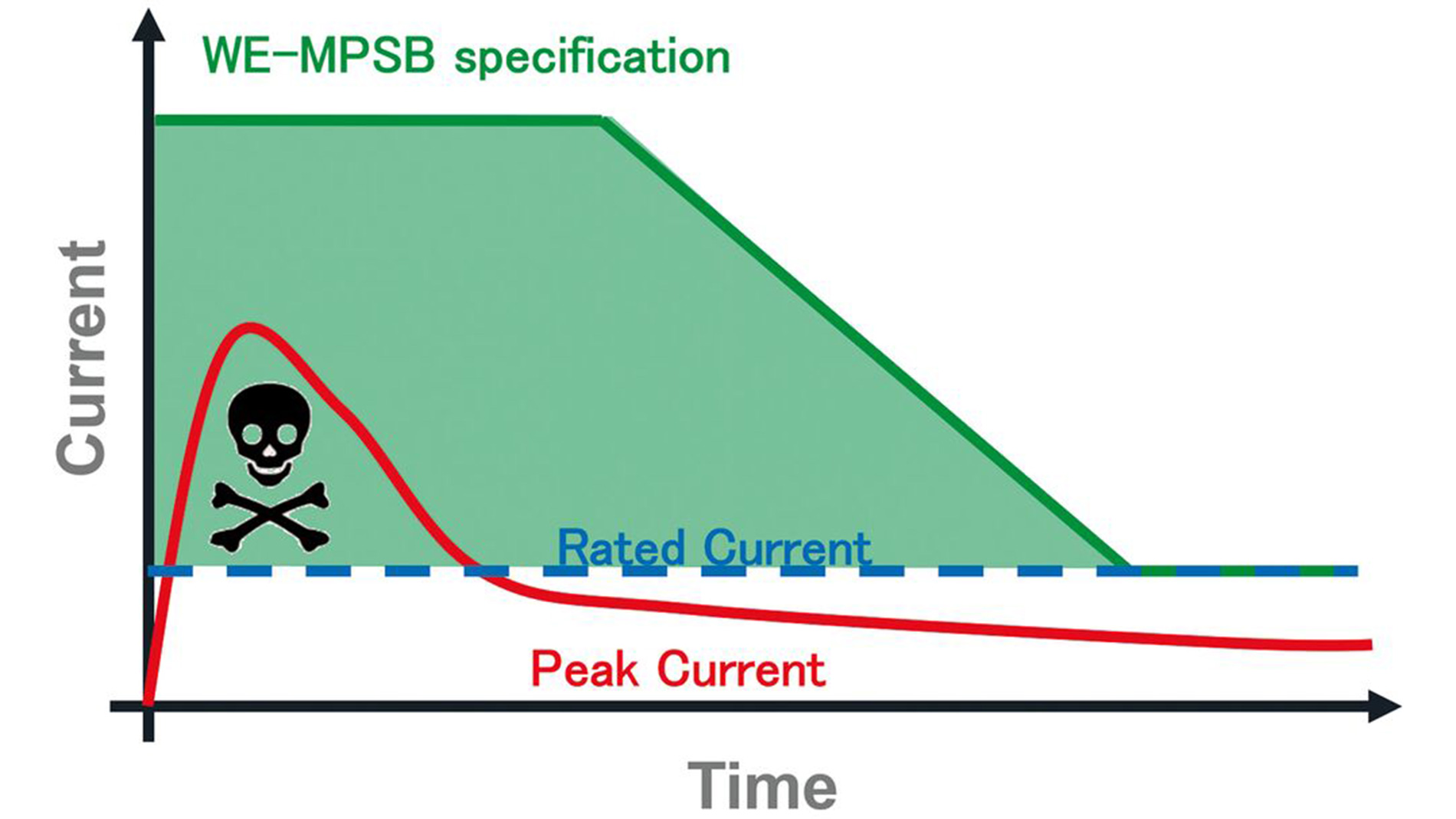
Each of these interlinked systems is subject to the dependence of the underlying pause between the individual pulses. To analyze the interlinked system with a shorter pause time, it is necessary to measure the influencing factors temperature [T], pulse repetitions [n] and pulse length [t]. The aim of the WE-MPSB series is to achieve an impedance comparable to that of the WE-CBF series. While the WE-CBF components are usually destroyed if the rated current is exceeded, the WE-MPSB components are designed to withstand higher pulse currents (Fig. 5).
Figure 5: The WE-MPSB series is designed for a higher pulse current carrying capacity and thus withstands current peaks that occur during the switch-on process. (Image: Würth Elektronic eiSos)
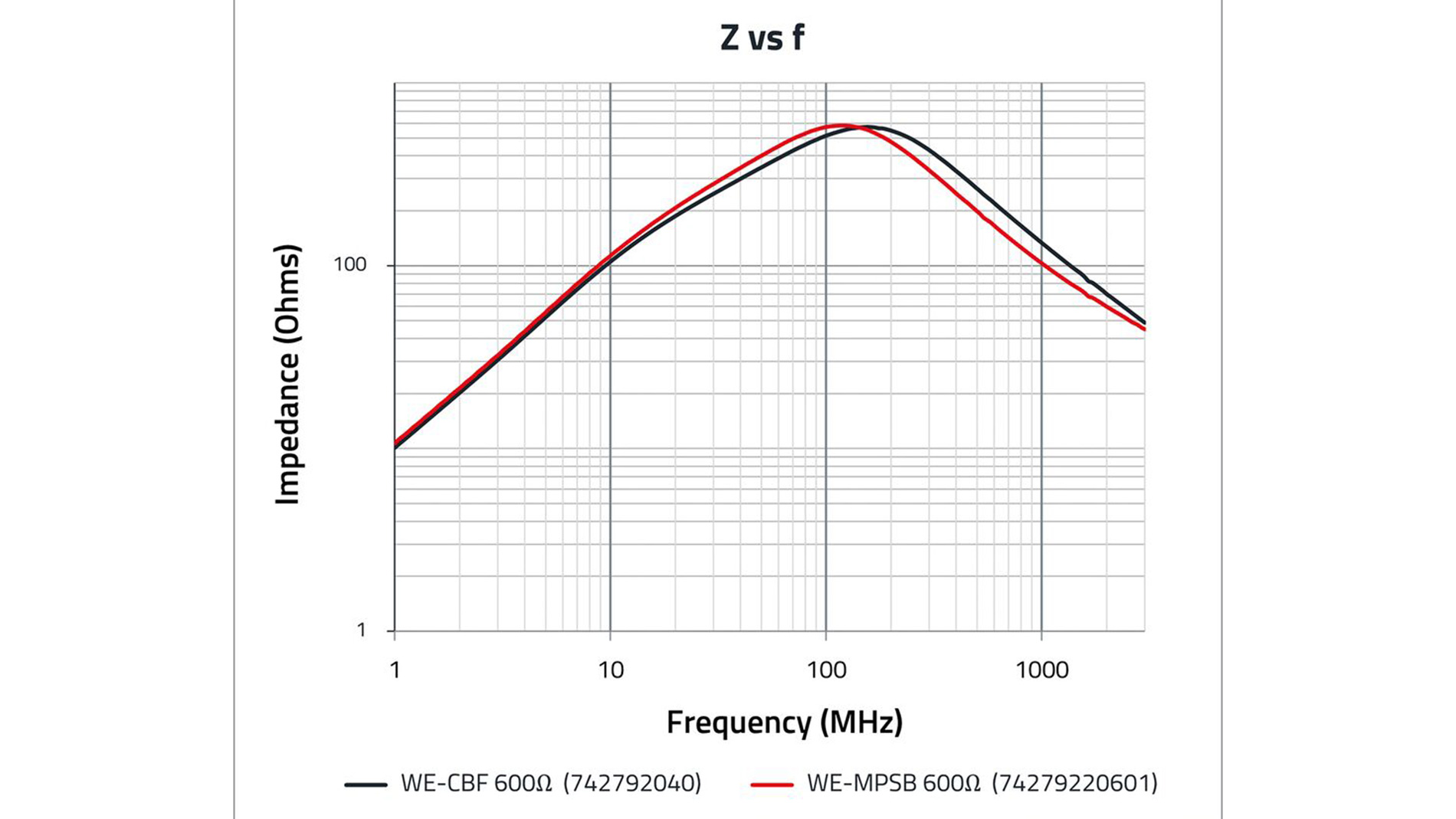
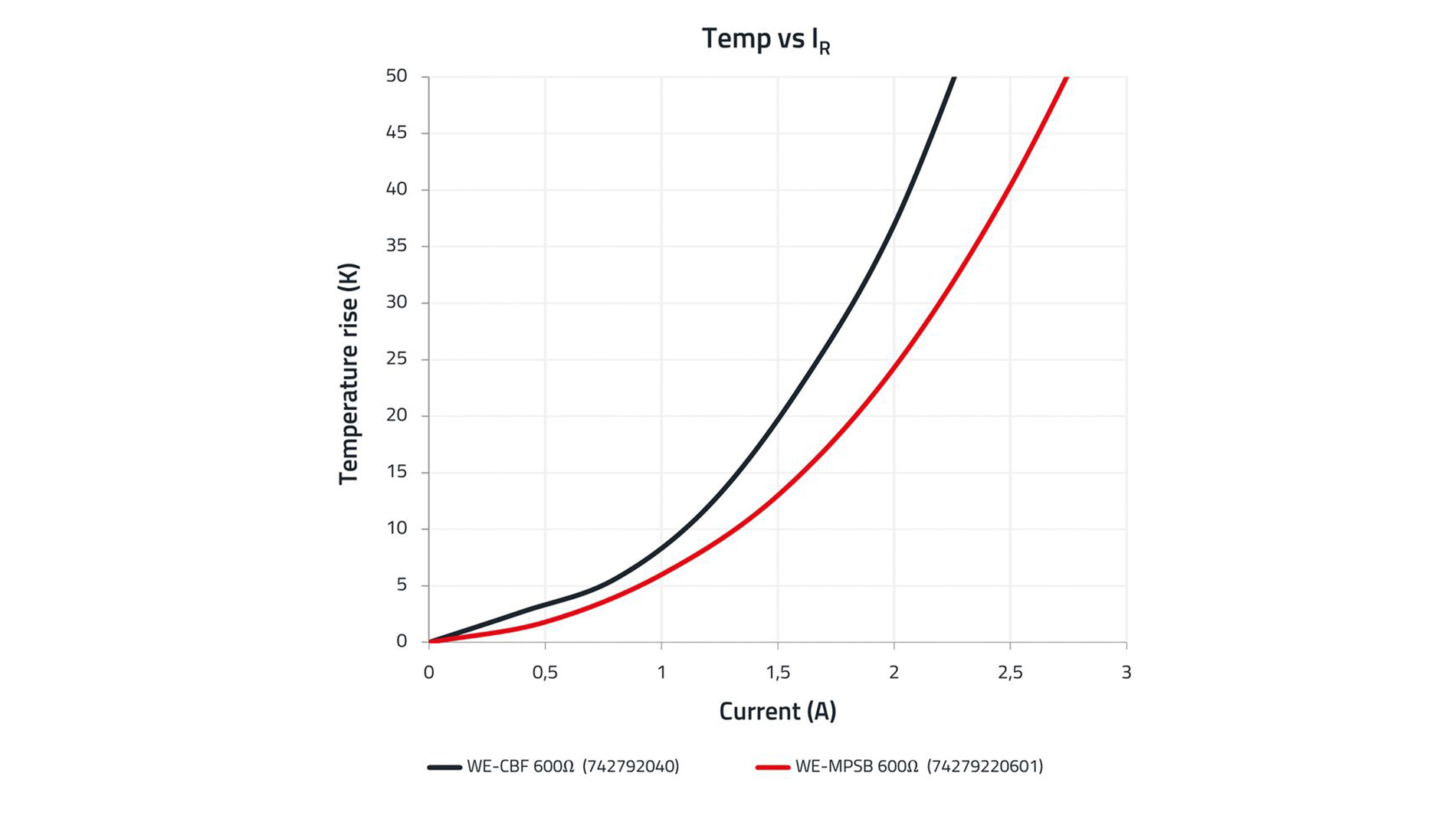
Using the example of the 600Ω types in size 0805 shown in Figure 6, the WE-MPSB series has a higher rated current due to the lower resistance.
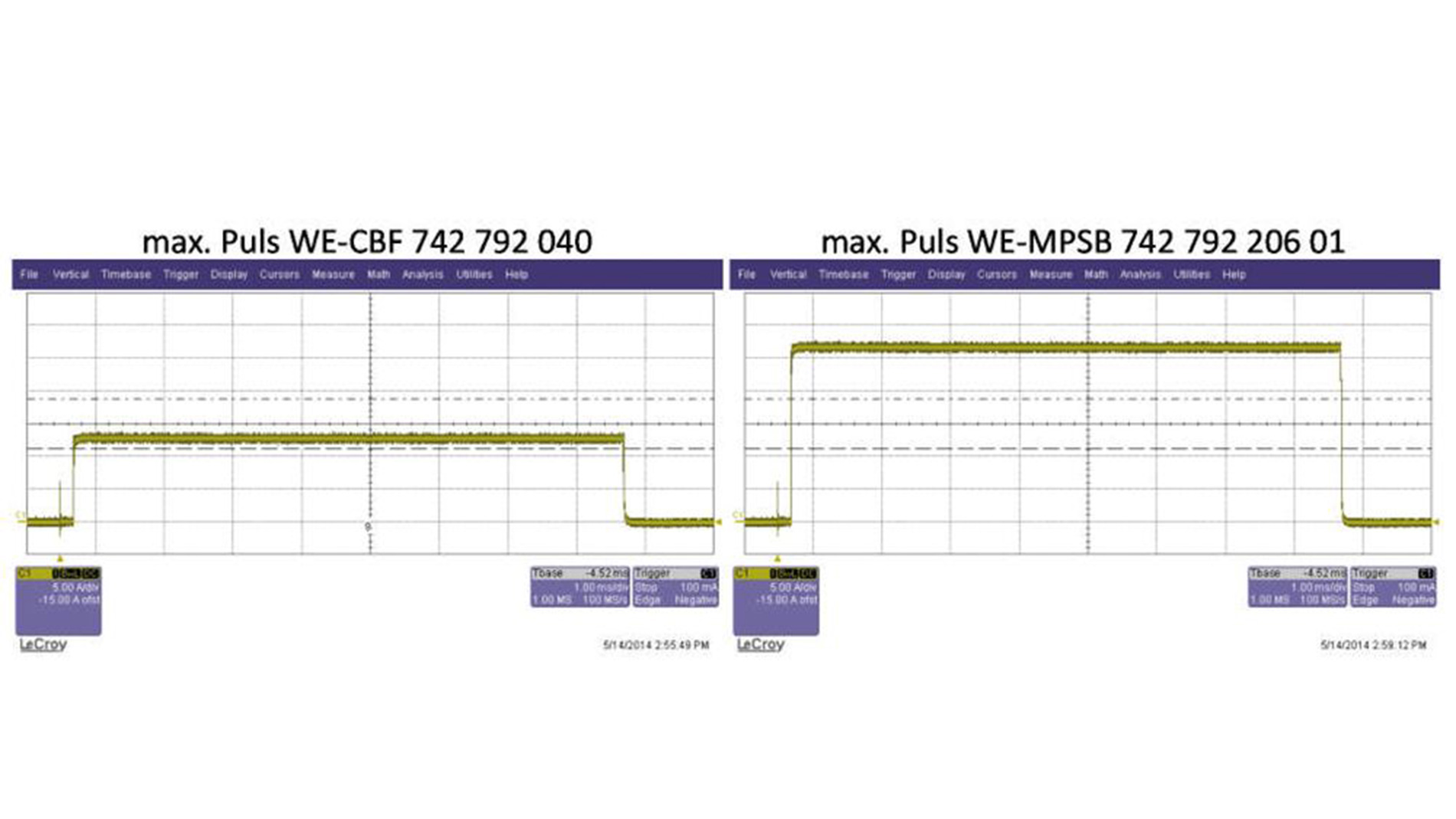
The WE-MPSB series has a significantly higher pulse load capacity than a comparable component of the WE-CBF series. Figure 7 shows the maximum pulse height of the WE-CBF 600Ω type on the left and the maximum pulse height of the comparable WE-MPSB 600 Ω type on the right. The WE-MPSB series was developed based on the requirements of circuits that load the multilayer ferrites with short-term peak currents in excess of the rated current. Compared to existing multilayer structures, the layer structure has been optimized to achieve a higher current carrying capacity through lower resistances. This makes the WE-MPSB series particularly suitable for use in circuits with pulse currents.
Wide range of components
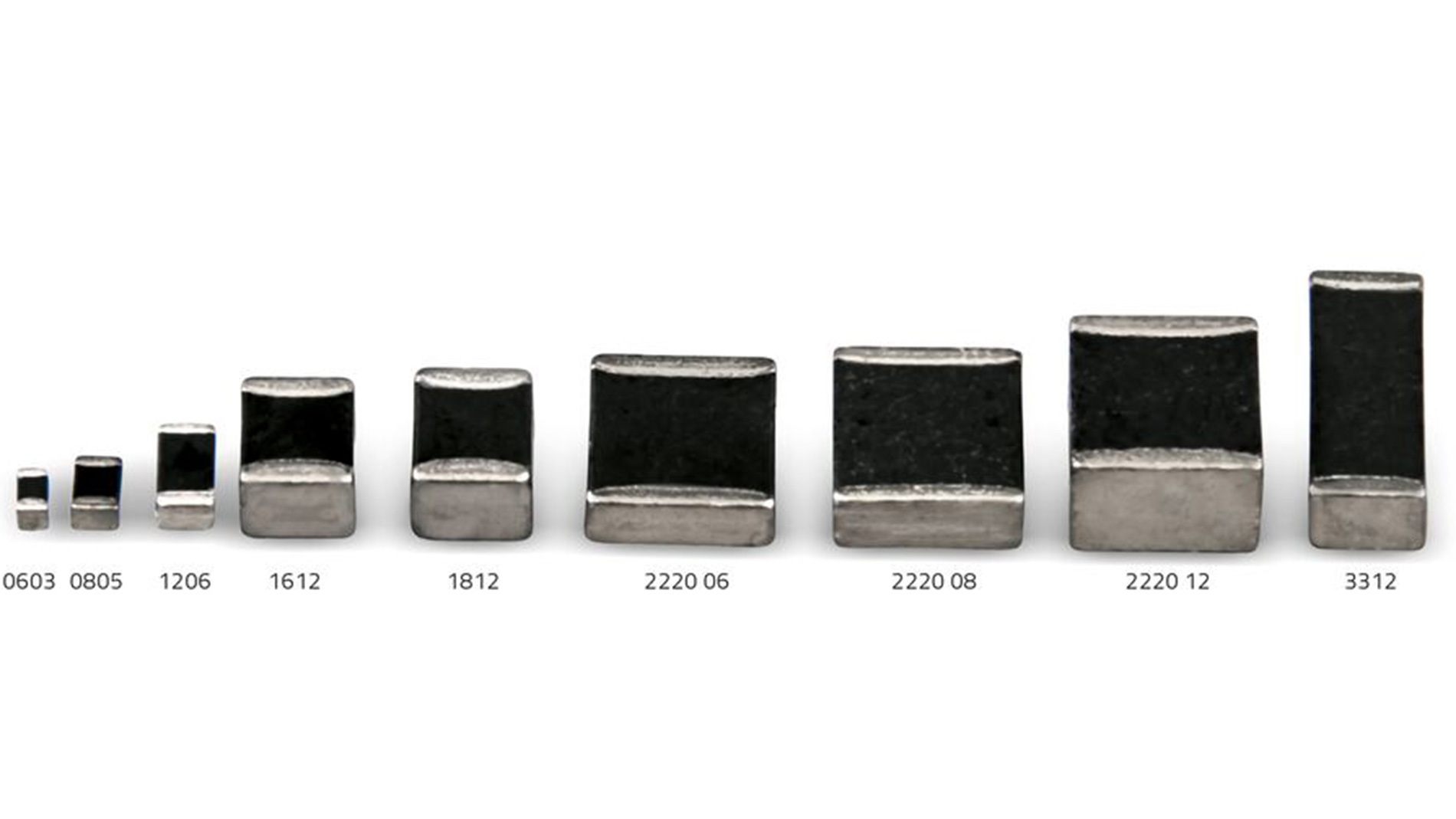
The WE-MPSB family includes components with an impedance Z (at 100 MHz) of 8 Ω to 600 Ω in sizes 0603 to 3312 (Fig. 8). The permissible peak inrush current IR is 2.1 A to 10.5 A, depending on the component. The direct current resistance RDC ranges between 1.0 mΩ and 80 mΩ. The specified frequency range extends from 1 GHz to 3 GHz. Qualification for an extension of the frequency range up to 8 GHz is currently being carried out.
For currents above 5 A, the PCB layout plays an increasingly important role with regard to the current carrying capacity of the conductor tracks. Würth Elektronik is therefore currently working on design tips for this. eg