
By Fernando Rodríguez and Manuel Gomez, TDK Electronics
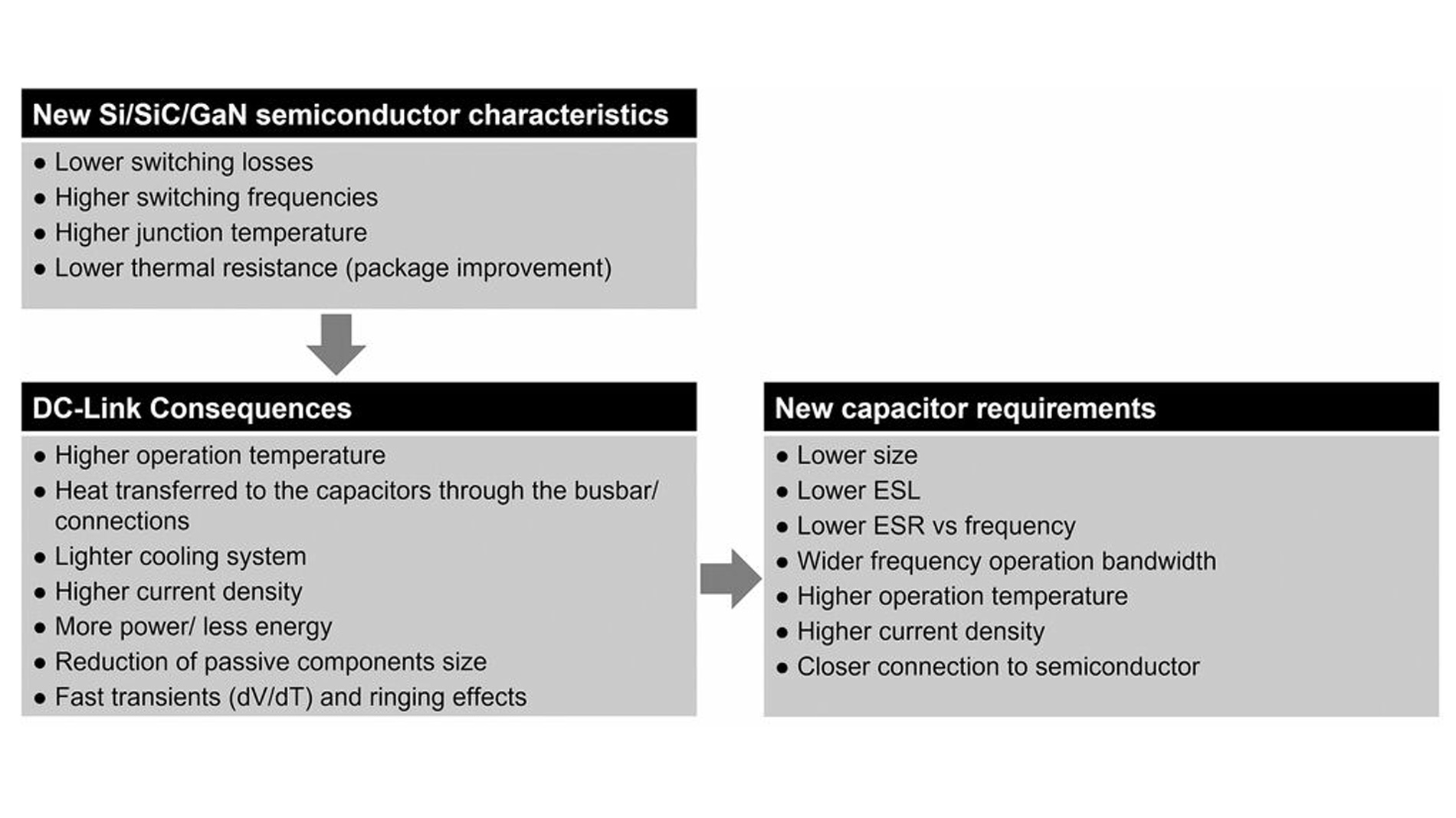
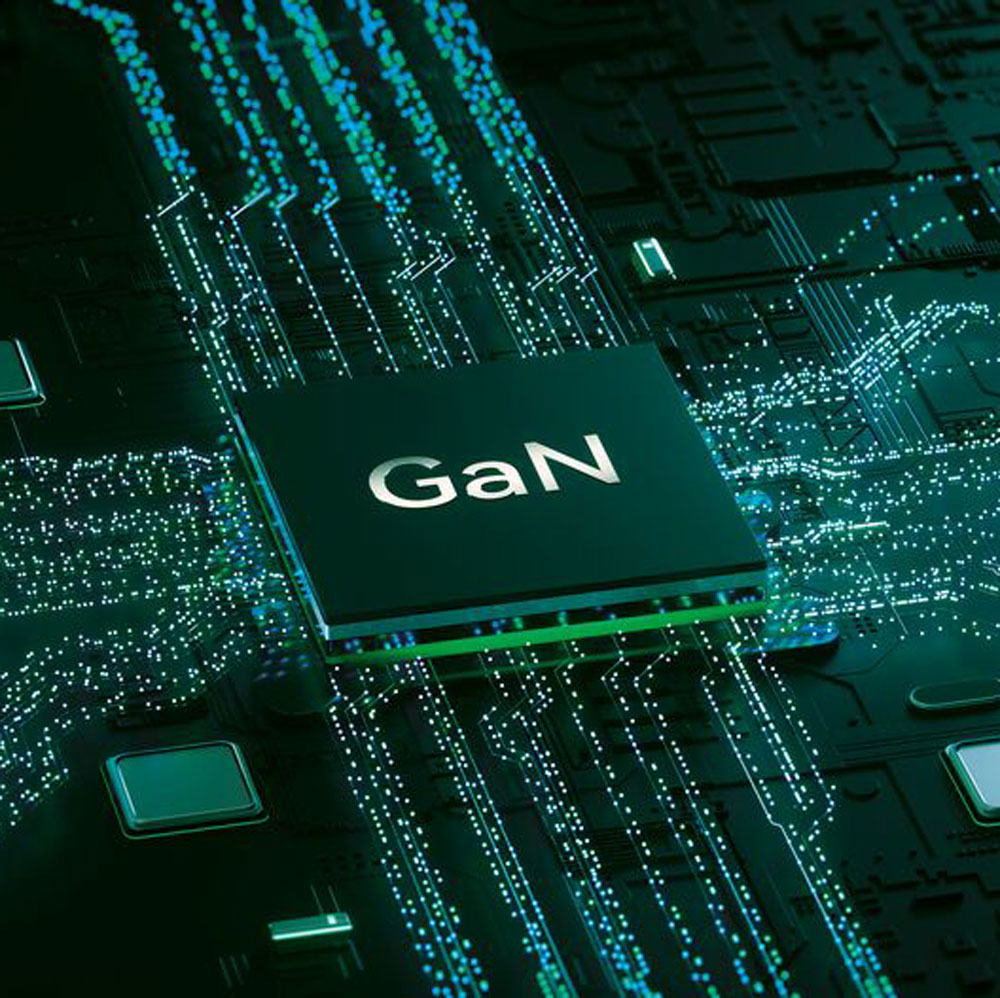
Power electronics engineers face a familiar challenge: new semiconductor technologies deliver smaller, more efficient converters with higher power output. At the same time, every other component in the system must keep pace. Wide-bandgap (WBG) semiconductors such as silicon carbide (SiC) and gallium nitride (GaN) are driving this shift. Their faster switching speeds, lower losses, and higher junction-temperature capability enable more compact converter layouts that can operate at elevated temperatures. Capacitors must evolve to match these demands. (Figure 1)
Modern DC-link capacitors need to handle higher electric fields and larger current densities in smaller packages. They require extremely low equivalent series inductance (ESL) for fast transient response and a low, frequency-stable ESR to minimize losses at high switching frequencies. Internal capacitor design matters too; parasitic effects like skin effect, internal resonances, and non-uniform current distribution can increase ESR and reduce efficiency.
Thermal management has become equally critical. Engineers often mount capacitors close to power semiconductors to minimize loop inductance, exposing them to conducted heat from power modules. Combined with softer cooling systems and higher semiconductor junction temperatures, capacitors face increased thermal stress. They must operate reliably at higher temperatures and current densities without sacrificing lifetime.
This article explains how TDK tackled these challenges by developing a new high-temperature dielectric film and integrating it into the ModCap UHP series, a new generation of modular high-power DC-link capacitors.
A New Polymer Engineered for Higher Temperatures
TDK has worked with industry partners for years to develop a dielectric film material capable of handling higher operating temperatures in metallized film capacitors. Building on earlier work with polypropylene–cyclic olefin copolymer (PP-COC) blends, Borealis and TOPAS Advanced Polymers recently introduced Stelora EPN (Ethylene-Propylene-Norbornene).
EPN blends two materials:
- Polypropylene (PP): a proven, easy-to-process dielectric
- Cyclic olefin copolymer (COC): a dielectric with superior temperature capability
COC alone cannot be stretched into a film. When blended with PP, however, the result is a material that processes like standard PP while retaining COC’s high-temperature strength.
Biaxially oriented EPN (BOEPN) films deliver excellent performance in practice. At moderate temperatures, they self-heal as effectively as standard biaxially oriented polypropylene (BOPP), matching its dielectric strength and capacitance density. At elevated temperatures, BOEPN clearly outperforms BOPP. Even during Accelerated Life Tests (ALT), BOEPN films maintain good self-healing capability, lower leakage current, and higher breakdown strength. This combination prevents thermal runaway under DC voltage stress and ensures robust operation at elevated temperatures.
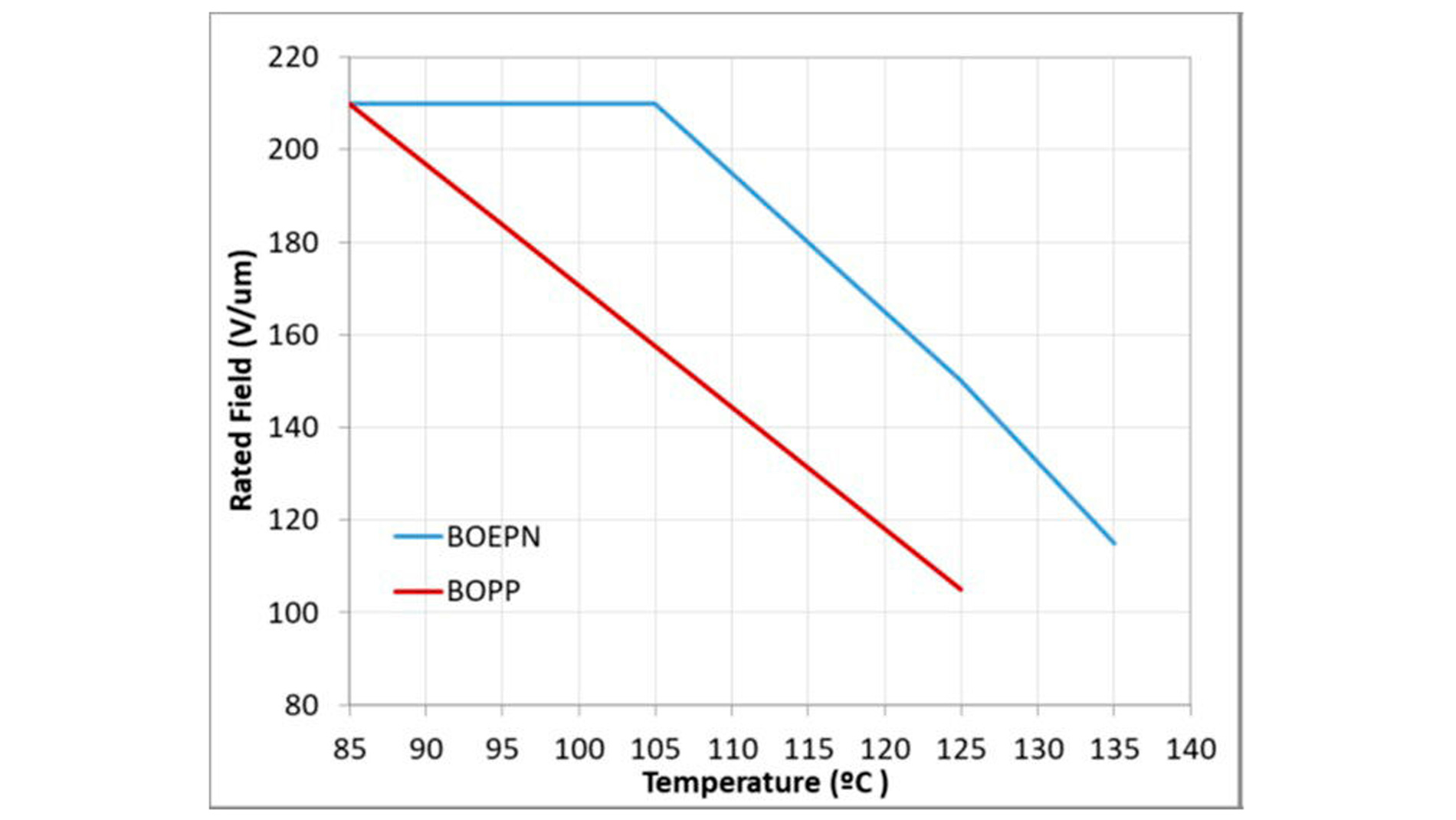
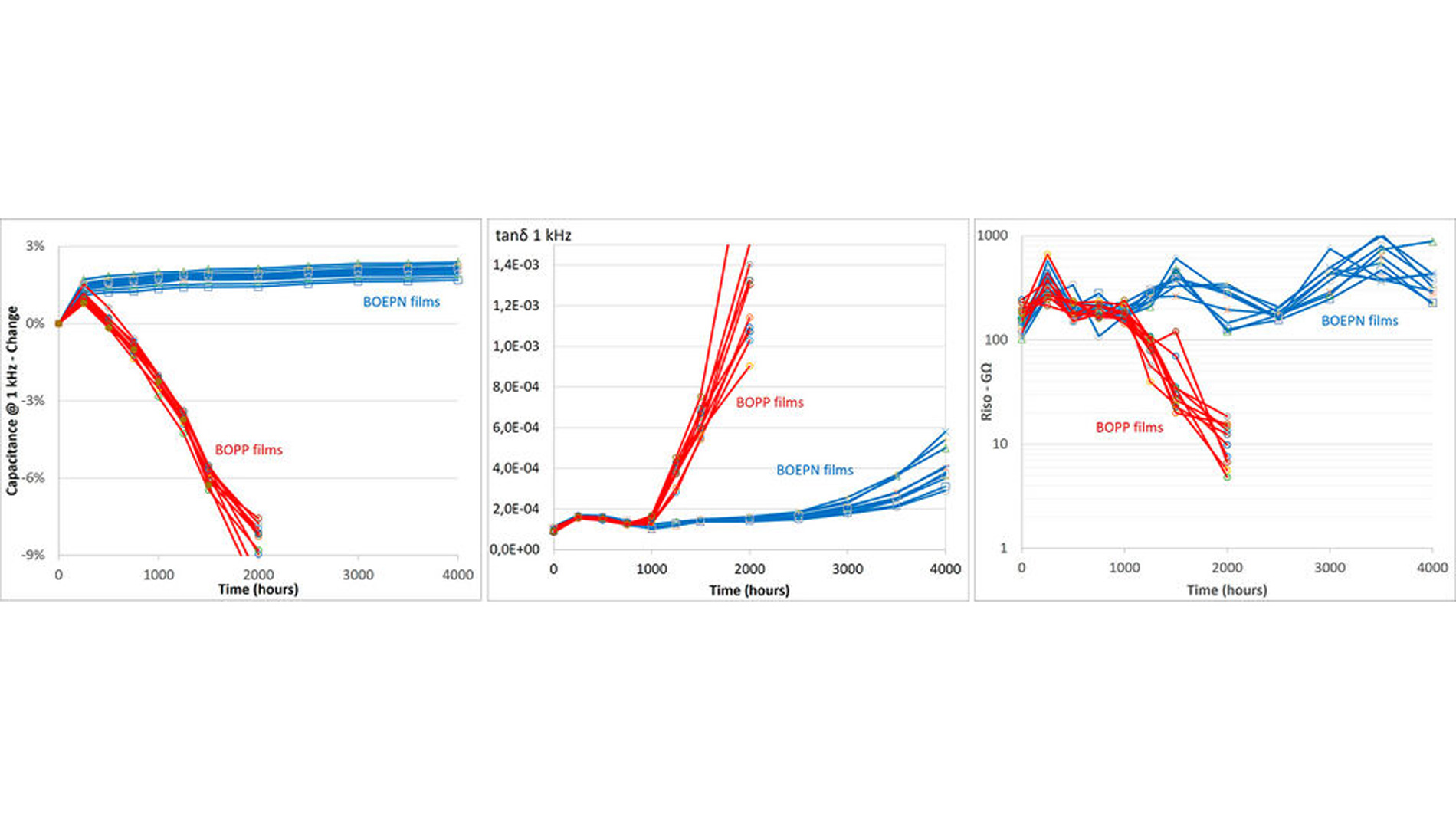
When used in metallized film capacitors, BOEPN delivers significantly better aging behavior and reliability than BOPP (Figure 2). Tests at +125 °C show that BOPP-based capacitors age faster. They lose capacitance, show higher losses (tan δ), and exhibit decreased insulation resistance. This, in turn, means higher leakage current and increased risk of thermal failure. BOEPN-based capacitors, by contrast, show only a slow increase in tan δ, primarily from mild electrode oxidation. (Figure 2)
Multiple endurance tests confirm this advantage. As Figure 2 summarizes, capacitors using BOEPN withstand higher electric fields above +85 °C, enabling higher capacitance density without derating or a shortened lifetime. With optimized capacitor design and BOEPN integration into ModCap technology, the rated electric field can be pushed even further (Figure 3)—delivering higher power density and thermal stability for next-generation converters. (Figure 3)
ModCap UHP: Built for Extreme Conditions
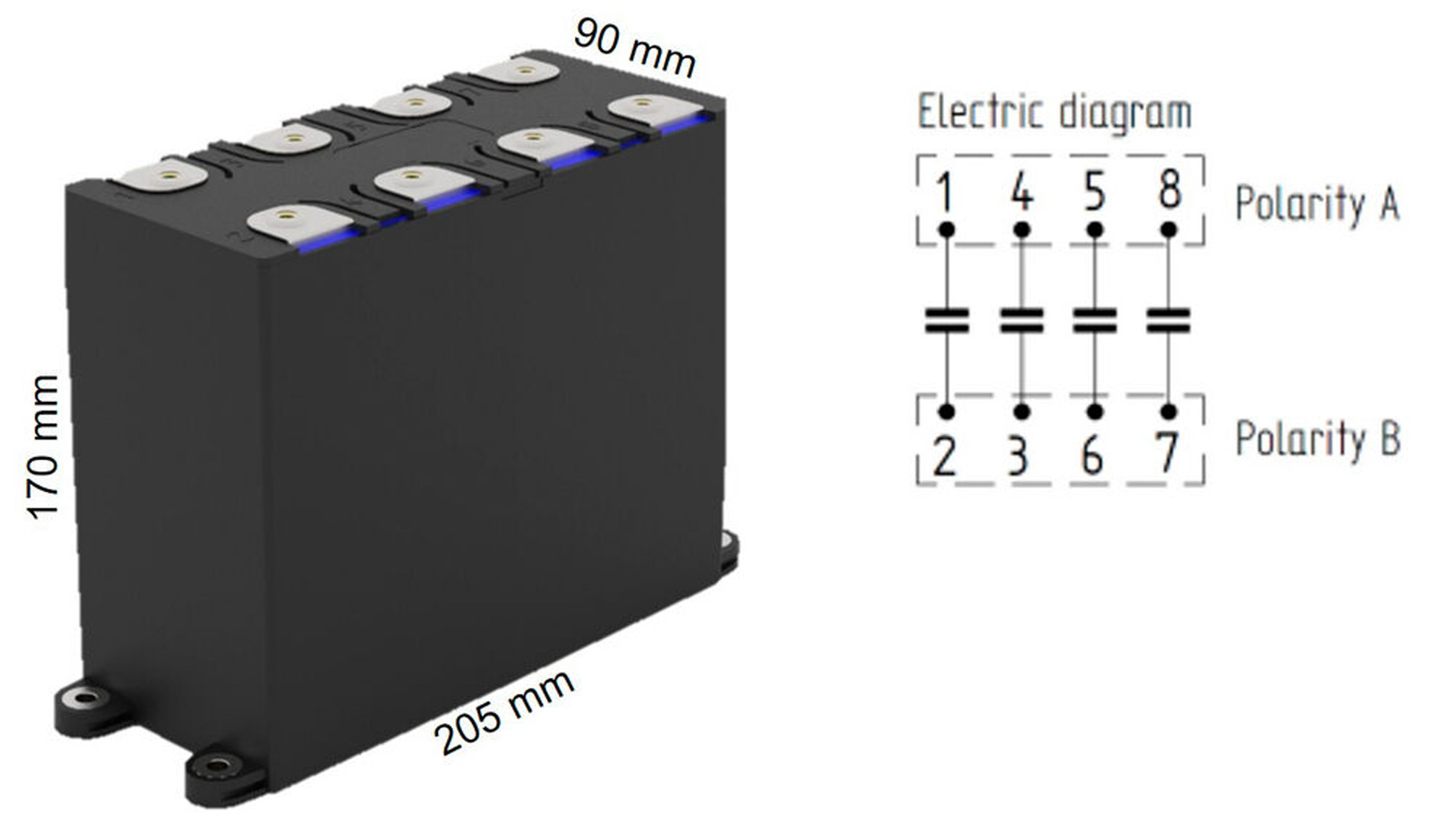
TDK’s ModCap HF series (B25647) with BOPP dielectric film has set the benchmark for DC-link capacitors used with advanced semiconductors. Building on this proven platform, TDK now offers the ModCap UHP series (B25648) with the new BOEPN dielectric film. This material enables operation at higher temperatures and current densities without derating, while maintaining the same mechanical design. ModCap UHP targets the most demanding applications where power density, cooling constraints, and temperature push ModCap HF to its limits or even beyond. Typical applications include energy storage systems (ESS), central solar inverters, electrolyzers, high-power DC-DC converters, and auxiliary drives using SiC semiconductors.
ModCap HF and UHP share the same modular concept, terminal layout, and external dimensions—ensuring mechanical and electromagnetic compatibility (Figure 4).
Both feature extremely low inductance (ESL ≈ 8 nH) for fast transient handling, low ESR across a wide frequency range, and ISCC-certified bio-circular polypropylene. They offer identical capacitance values, high voltage strength, and a 200,000-hour lifetime at rated voltage and temperature.
ModCap UHP goes further:
- Up to +21percent higher current density, enabling up to +45 percent higher converter power density in the same footprint
- Rated operating temperature increased from +80 to +105 °C without voltage or lifetime derating
This makes ModCap UHP the right choice when converters must deliver more power under demanding thermal conditions – whether due to softer cooling systems or heat transfer from nearby semiconductors.
Testing beyond IEC 61071:2017 and IEC 61881-1:2010 confirms that ModCap UHP maintains aging behavior at +105 °C comparable to ModCap HF at +80 °C—demonstrating excellent stability and robustness under elevated-temperature operation (Figure 5 and Figure 6)
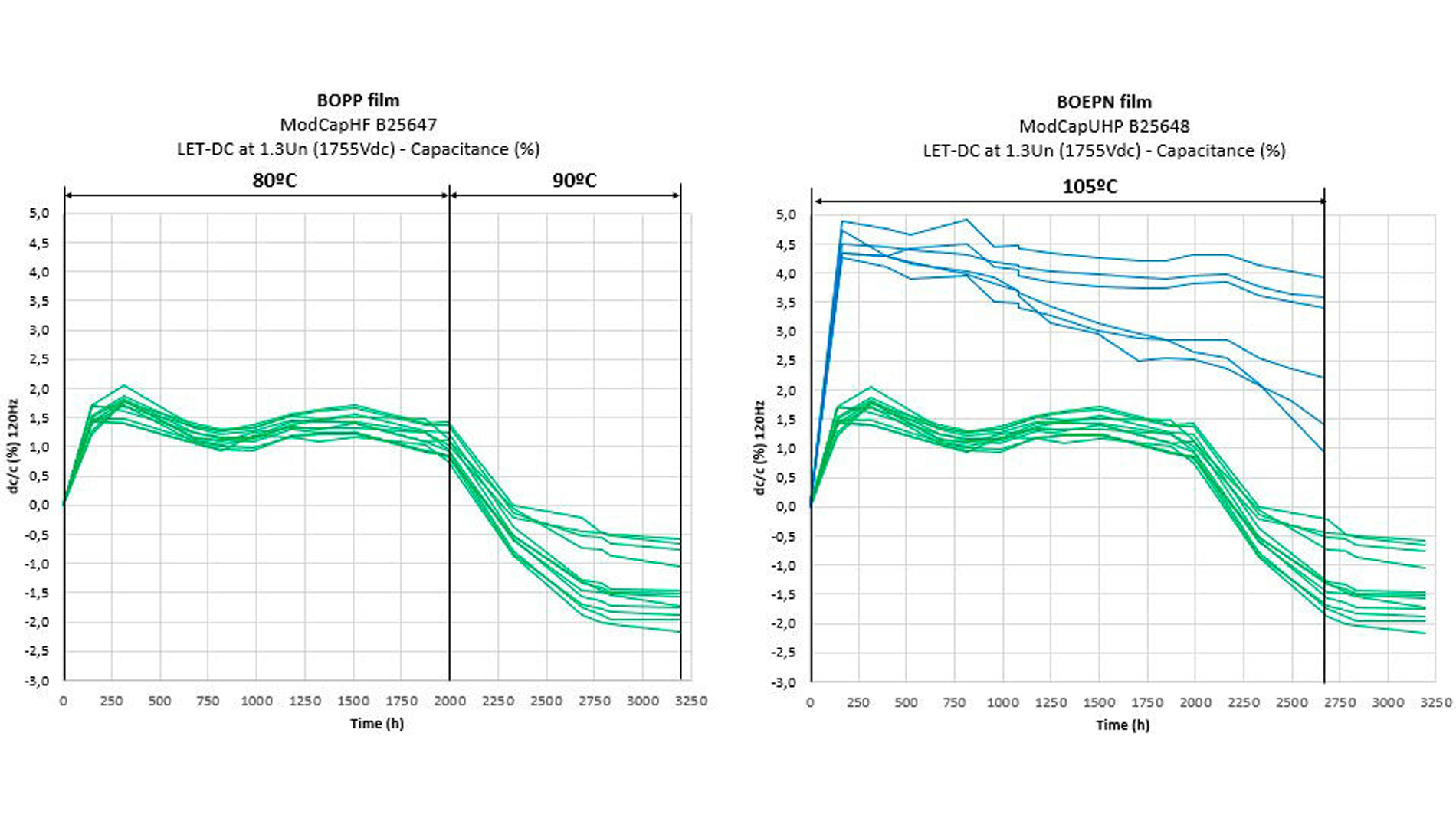
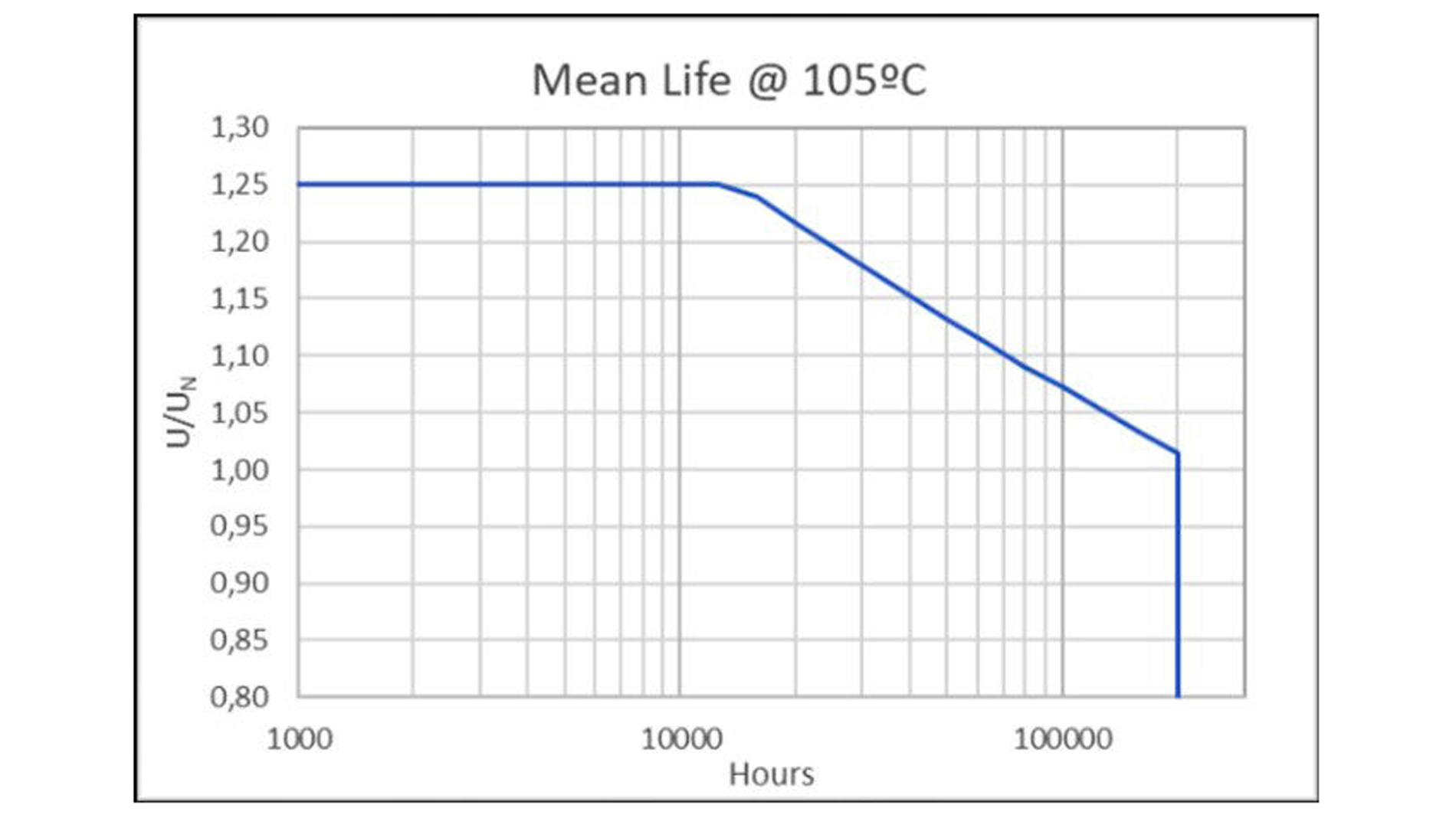
Figure 5: Capacity change over time (left) for ModCap HF and (right) for ModCap UHP. Image: TDK Electronics
Figure 6: Mean lifetime of ModCap UHP. Image: TDK Electronics
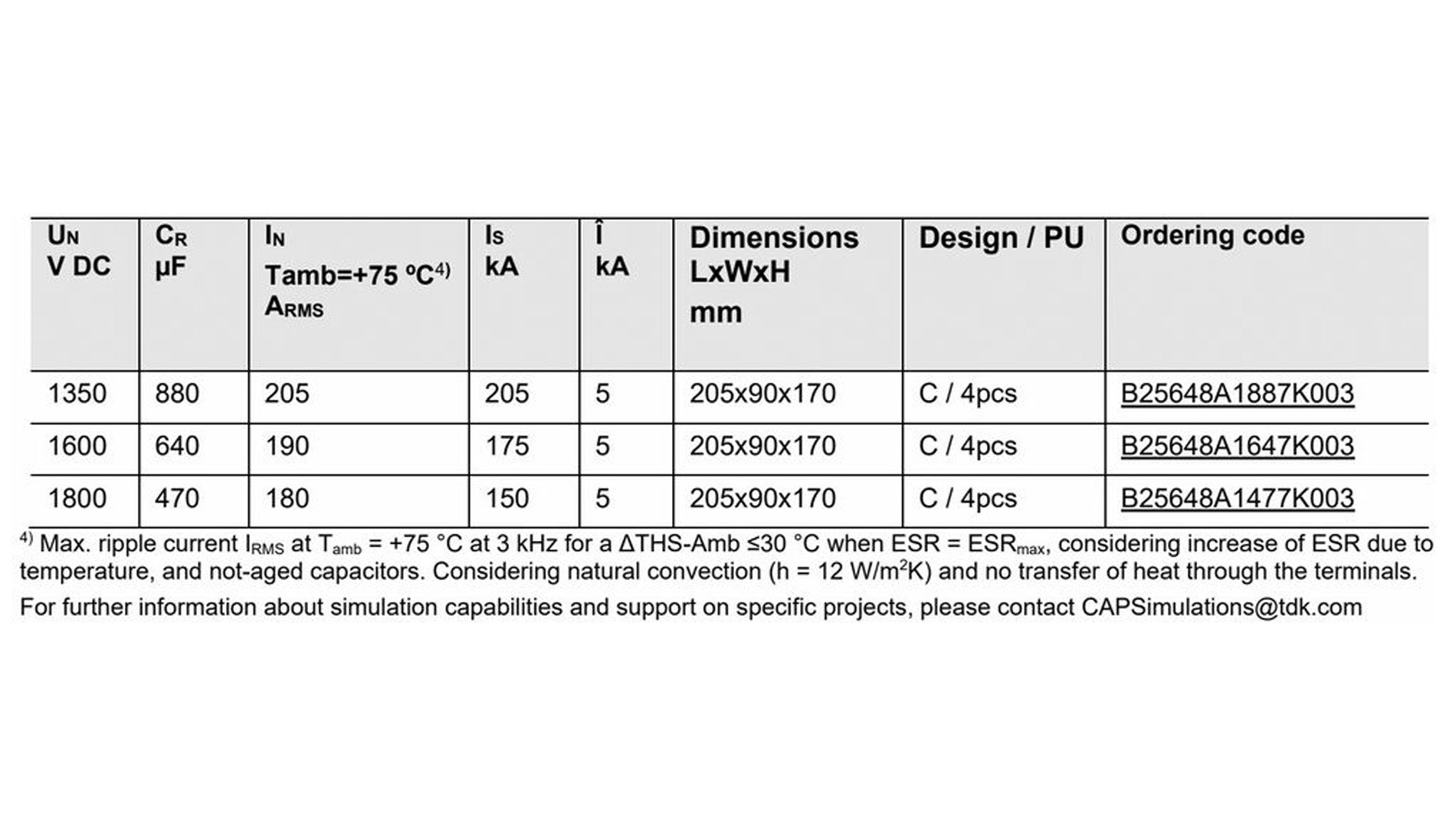
ModCap UHP is currently available in rated voltages from 1350 to 1800 V; Table 1 shows the main electrical parameters. Voltage extensions ranging from 900 to 2000 V are under development. (Table 1)
Real-World Comparison: ModCap HF vs. ModCap UHP
To verify the practical advantages of switching from BOPP (ModCap HF) to BOEPN (ModCap UHP), TDK conducted a detailed case study on a high-current DC-link application. The goal: assess how the +25 K higher rated temperature and +21 percent higher current density translate into actual design benefits—performance, volume, and lifetime.The analyzed converter represents a typical high-power application:
- DC-link voltage: 1600 V
- Total capacitance: ≥1850 µF
- RMS current: 570 A
- Ambient temperature: +75 °C
- Temperature at power module terminals: +95 °C
- DC-link lifetime: ≥200,000 h
Two DC-link configurations were evaluated: one using ModCap HF capacitors (BOPP dielectric) and one using ModCap UHP capacitors (BOEPN dielectric).
ModCap HF Solution
According to the ModCap HF datasheet, a suitable starting point is the B25647A1647K003 (1600 V / 640 µF / 160 A). Three capacitors in parallel meet the capacitance requirement (≥1850 µF), but deliver only 480 A (3 x 160 A)—below the required 570 A. At least four units in parallel are needed to satisfy both current and capacitance demands.
Since this configuration is current-limited rather than capacitance-limited, a higher-voltage variant—B25647A11477K003 (1800 V / 470 µF / 150 A)—provides a more robust lifetime margin. The resulting DC-link has a total volume of 15.4 dm³.
Finite element method (FEM) simulations assessed thermal behavior and expected lifetime. These include thermal boundary conditions (ambient temperature, cooling, heat transferred from power modules), the complete current amplitude spectrum over frequency, and electromagnetic effects on internal capacitor construction.
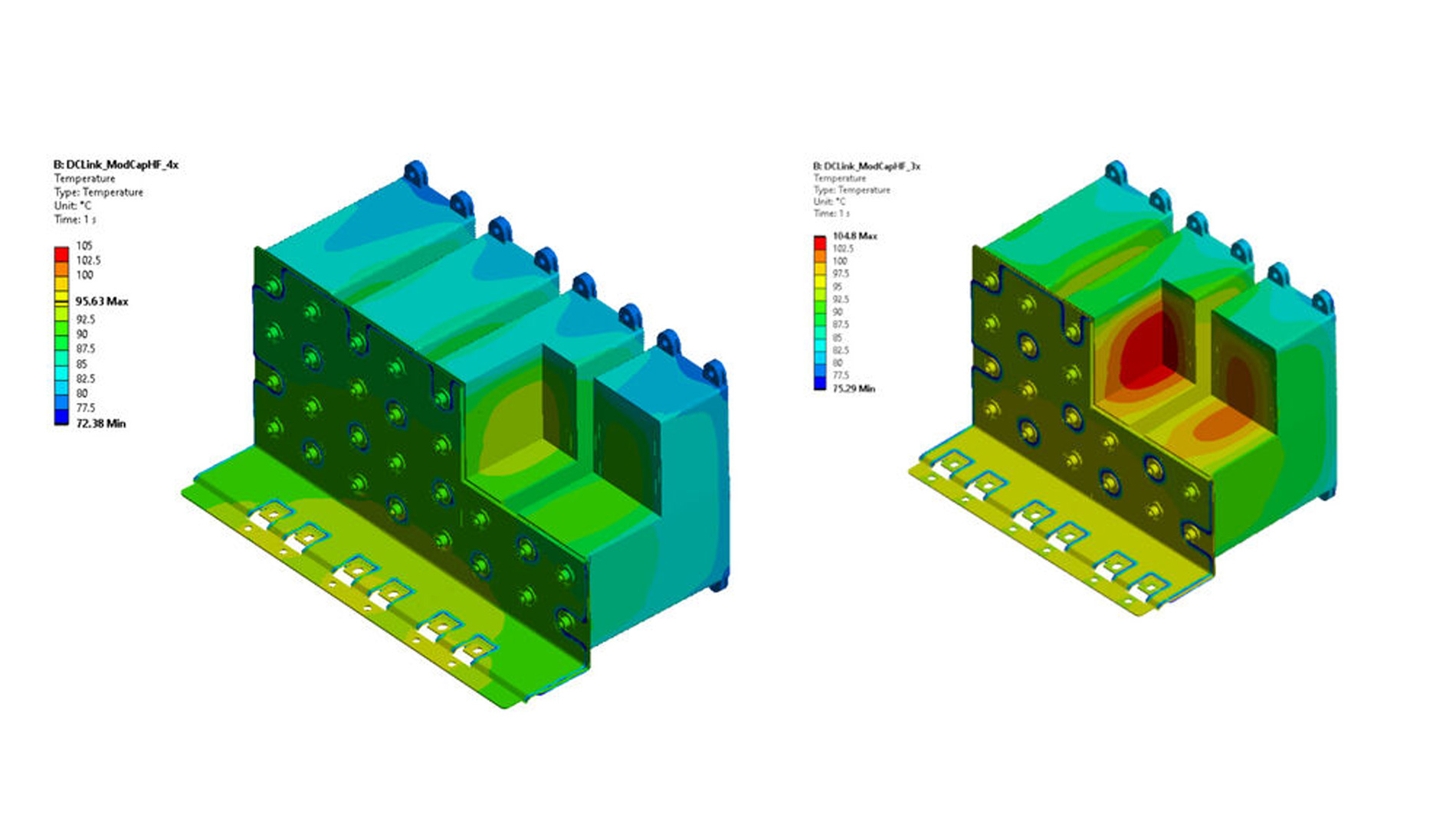
FEM results showed a maximum internal capacitor temperature of +96 °C, caused by self-heating and heat conduction from power module terminals (Figure 7). Since this exceeds ModCap HF’s +80 °C rating, lifetime falls below 200,000 hours—violating the design target.
Maintaining lifetime and thermal margins requires five units in parallel, providing:
- DC-link voltage: 1800 V > 1600 V
- Capacitance: 2350 µF > 1850 µF
- RMS current: 750 A > 570 A
- DC-link volume: 19.3 dm³
While technically feasible, this solution significantly increases both size and cost.
ModCap UHP Solution
For the same 1600 V system, the equivalent ModCap UHP capacitor is B25648A1647K003 (1600 V / 640 µF / 190 A). This type offers identical voltage, capacitance, and outer dimensions to its ModCap HF counterpart—but features 19 percent higher rated current and a 25 K higher rated temperature (+105 °C vs. +80 °C).
Three capacitors in parallel fulfill all application requirements:
- DC-link voltage: 1600 V = 1600 V
- Capacitance: 1880 µF > 1850 µF
- RMS current: 570 A = 570 A
- DC-link volume: 11.5 dm³
Total DC-link volume drops by 40 percent compared to the ModCap HF design.
Thermal FEM simulations under identical boundary conditions revealed a maximum internal temperature of +104.8 °C—just below the +105 °C rated limit. The ModCap UHP design achieves full lifetime without derating: 200,000 hours even under elevated thermal stress.
Summary and Key Takeaways
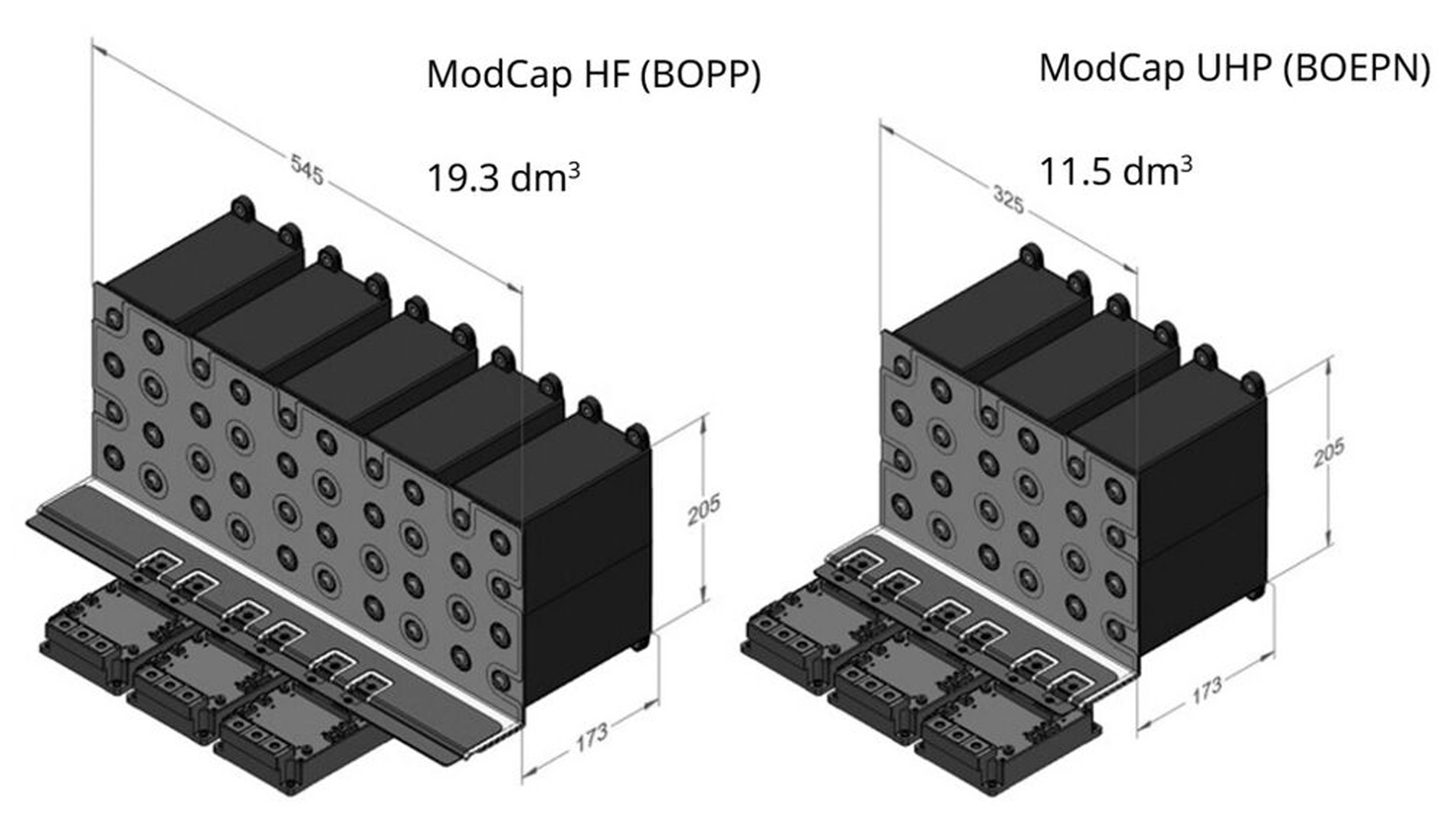
For the high-current-density DC-link studied, only three BOEPN-based capacitors are required instead of five BOPP-based units. This reduction comes from higher current and power density, combined with the increased rated temperature of the ModCap UHP series.(Figure 8)
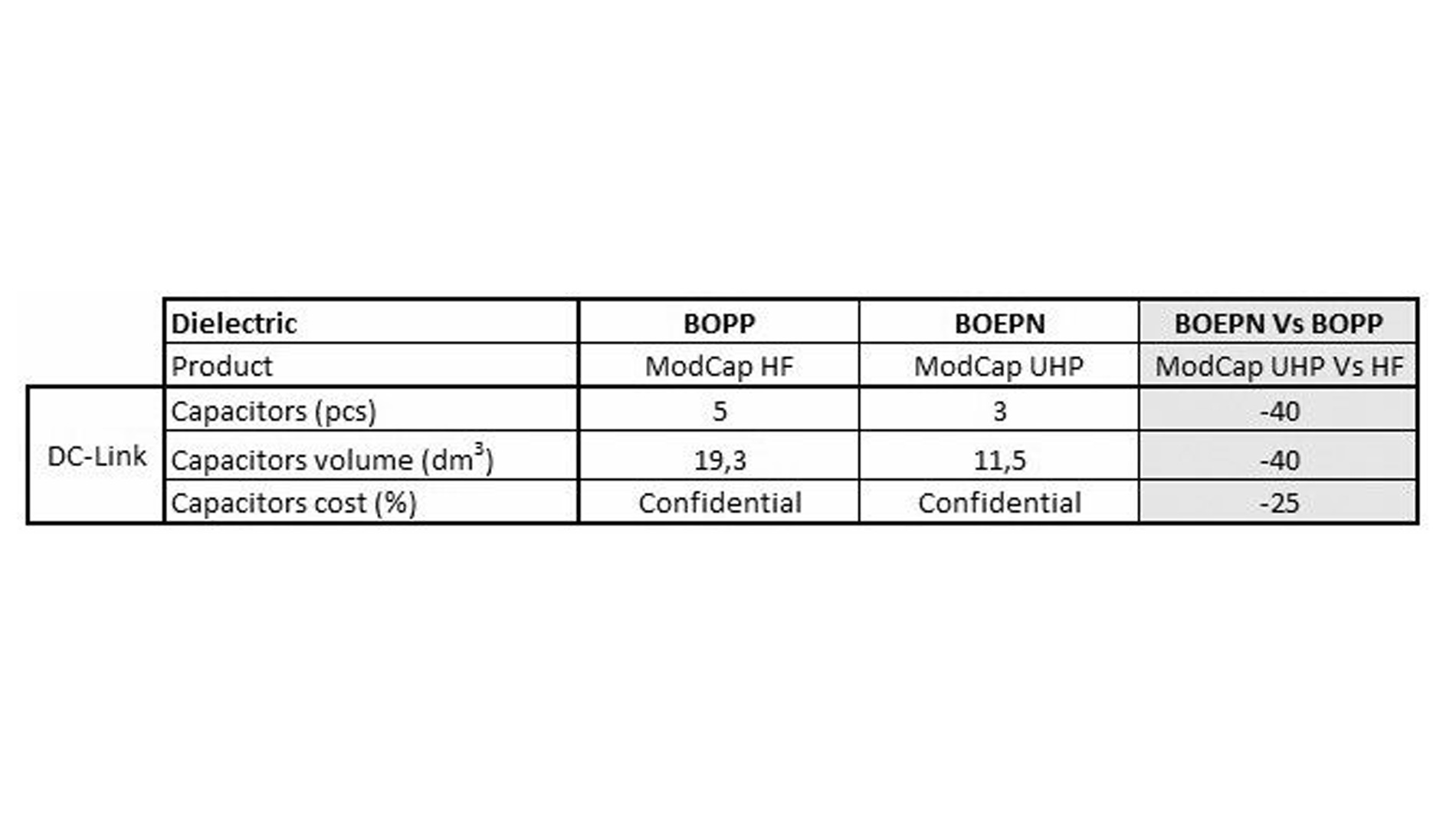
As Table 2 and Figure 8 summarize, the ModCap UHP solution achieves:
40 percent lower DC-link volume, enabled by 19 percent higher current density and 25 K higher rated temperature
25 percent lower capacitor cost, excluding additional savings from a smaller external busbar
For applications with demanding current, thermal, and lifetime requirements—such as those using advanced power modules—BOEPN film capacitors deliver a more compact and cost-efficient DC-link design than conventional BOPP-based solutions. In high-power-density designs like the application analyzed here, the critical DC-link parameters are current density, thermal management, and lifetime. ModCap UHP delivers an optimized balance of volume, capacitance density, current capability, lifetime, and cost—providing a robust, space-efficient solution for next-generation power converters based on advanced semiconductor technologies. eg